NATO's Role in Israel-Iran-US War & Middle east Asia Crisis
International Affairs • April 04, 2026 • Global Edition
.jpeg)
NATO's Role in the Israel-Iran-US War Crisis
The ongoing Israel-Iran-US war, which erupted on February 28, 2026, has thrust the North Atlantic Treaty Organization into one of its most significant tests since the end of the Cold War. While NATO as an organization has deliberately stayed out of the direct fighting, the conflict has exposed serious cracks in the transatlantic alliance. European allies have largely refused to support offensive operations, prompting sharp criticism from Washington and even threats from President Donald Trump to reconsider U.S. membership in NATO. At the same time, the alliance continues to demonstrate its core strength in collective defense, intercepting Iranian threats to NATO territory.
This article explores the current situation surrounding NATO amid the Israel-Iran-US war. It examines what is breaking within the alliance, analyzes why NATO remains indispensable for geopolitics and war crises, and offers insights into the future of this 77-year-old partnership. For policymakers, analysts, and global observers, understanding these dynamics is essential as the conflict reshapes international security.
Understanding NATO: Foundations and Enduring Purpose
The NATO alliance was established in 1949 as a cornerstone of Western collective defense against Soviet expansion. Its founding treaty, signed by 12 original members, includes the famous Article 5, which declares that an armed attack against one member is considered an attack against all. This principle has been invoked only once—in the aftermath of the September 11, 2001 attacks—demonstrating NATO's focus on mutual protection rather than offensive campaigns.
Over the decades, NATO has evolved. It expanded to 32 members after the Cold War, incorporating former Eastern Bloc nations and strengthening Europe's security architecture. The alliance has engaged in crisis management operations, from peacekeeping in the Balkans in the 1990s to leading the International Security Assistance Force in Afghanistan. Today, NATO's strategic concept emphasizes deterrence, defense, and dialogue, with a strong emphasis on resilience against hybrid threats, cyber attacks, and ballistic missiles.
In the context of the current Israel-Iran-US war, NATO's foundational principles are being tested. The conflict does not trigger Article 5 because Iran has not attacked a NATO member state directly in a manner that qualifies under the treaty. Secretary General Mark Rutte has repeatedly emphasized this distinction, stating clearly that "NATO is not involved" in the military operations against Iran. Yet the alliance's indirect exposure—through regional spillover, energy security concerns, and alliance cohesion—highlights both its limitations and its enduring value.
NATO's structure, built on consensus decision-making among sovereign states, allows for flexibility. Individual members can act independently, as seen with limited logistical support from some allies, while the organization itself maintains neutrality in non-Article 5 scenarios. This balance has preserved NATO through past crises, but the Israel-Iran-US war is revealing new pressures.
The Israel-Iran-US War: A Brief Overview of the Current Situation
The war began with coordinated U.S. and Israeli strikes on February 28, 2026, targeting Iran's nuclear facilities, missile production sites, air defenses, and leadership. The operation, dubbed Operation Epic Fury by the U.S., resulted in the assassination of Supreme Leader Ali Khamenei and significant degradation of Iran's military capabilities. Iranian retaliation followed swiftly, with waves of missiles and drones striking targets across Israel, U.S. bases in the Gulf, and even NATO member Turkey.
By early April 2026, the conflict has entered its second month. Iran has disrupted shipping in the Strait of Hormuz, a critical chokepoint for 20 percent of global oil, leading to skyrocketing energy prices and fuel shortages in parts of Asia and Europe. Regional escalation has involved Iranian proxies, including Houthi attacks, and spillover incidents such as drone incursions near NATO bases.
The human and economic toll is severe. Thousands have died, millions displaced, and global markets rattled. For NATO, the war poses indirect risks: energy instability in Europe, potential refugee flows, and heightened tensions with Russia, which has benefited from diverted Western attention.
NATO allies monitor the situation closely through the North Atlantic Council. While the alliance condemns Iran's ballistic missile threats and has praised U.S.-Israeli actions for curbing nuclear proliferation, it stops short of collective involvement. This measured approach reflects NATO's defensive mandate amid a war many European capitals view as outside the alliance's core interests.
NATO's Official Position: Non-Involvement with Strategic Vigilance
NATO's response to the Israel-Iran-US war has been consistent and cautious. On March 2, 2026, Secretary General Rutte praised the strikes for degrading Iran's nuclear and missile programs but made it explicit: "There are absolutely no plans for NATO to get dragged into this conflict." The alliance limits its role to enabling support, such as logistics and intelligence sharing on an individual basis, while refusing any offensive participation.
This stance aligns with NATO's legal framework. The conflict does not meet Article 5 criteria, and European members have emphasized the need for United Nations authorization for broader actions—something absent here. NATO has, however, activated its defensive systems. In early March, alliance forces successfully intercepted Iranian ballistic missiles targeting Turkey, showcasing integrated air and missile defense capabilities.
Such actions underscore NATO's commitment to protecting its territory without entering the fray. Rutte has reiterated solidarity with affected allies and stressed vigilance against broader threats from Iran's arsenal. For the NATO alliance, this approach maintains unity on defense while avoiding entanglement in a politically divisive war.
What Is Breaking in NATO: Deepening Transatlantic Fractures
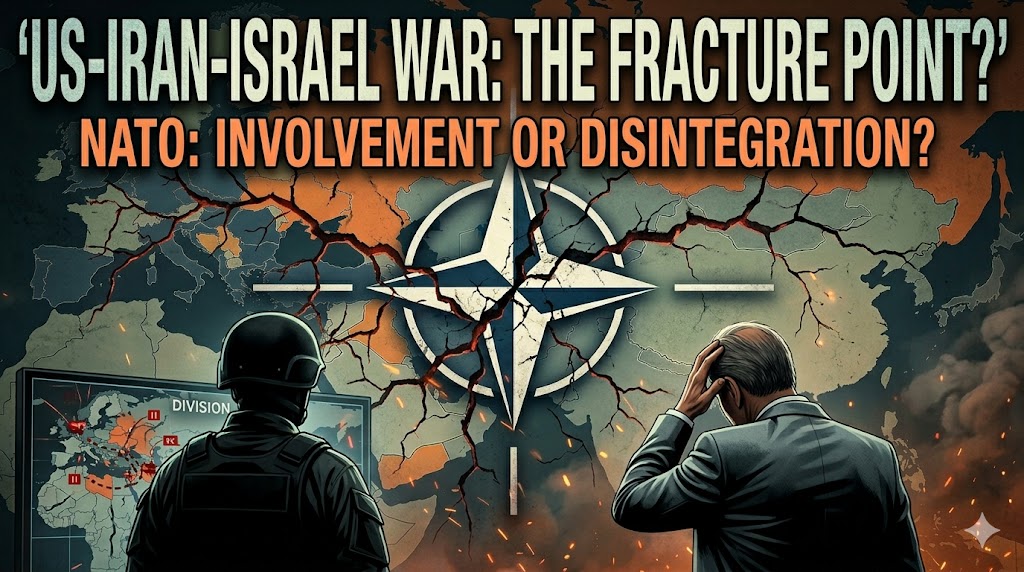
The Israel-Iran-US war is exposing what many analysts describe as the most serious rift in NATO since its founding. At the heart of the divisions is a fundamental disagreement over burden-sharing and strategic priorities. President Trump has publicly criticized allies for not supporting U.S. efforts, demanding naval deployments to secure the Strait of Hormuz and access to European bases for operations. The response from key members has been firm refusal.
Spain has closed its airspace and denied use of bases at Rota and Morón. Italy blocked U.S. bombers from Sicilian facilities. France and Germany have provided only defensive assistance, citing lack of UN legitimacy for offensive strikes. The United Kingdom has ruled out participation in attacks, and even traditionally supportive nations like Canada have expressed reservations. Out of 32 members, only a handful—Poland, Romania, Hungary, the Czech Republic, and Canada—have offered explicit backing.
These refusals have prompted Trump to threaten a U.S. withdrawal from NATO, echoing his long-standing complaints about European "free-riding." Defense Secretary Pete Hegseth has questioned the alliance's value when allies hesitate to stand with the United States. Such rhetoric has frayed trust, with European leaders viewing the demands as an attempt to pull NATO into an American-led conflict unrelated to European security.
The fractures go beyond policy. They reveal structural issues: differing threat perceptions (Europe prioritizes Russia and energy security; the U.S. focuses on Middle East proliferation), domestic political pressures, and legal concerns. As one analysis notes, over 84 percent of NATO members have remained neutral or opposed, shattering Washington's hopes for unified support. This "de facto disintegration" risks undermining the alliance's credibility, with some experts warning it could spell the end of NATO as we know it if unresolved.
Yet the NATO alliance has survived past crises—Vietnam-era tensions, the Iraq War divisions, and Afghanistan withdrawal debates. The current strains test its resilience more profoundly because they coincide with ongoing challenges like the Russia-Ukraine conflict.
European Allies' Resistance: Motivations and Implications
European pushback stems from several factors. Many leaders argue the war lacks international legal backing and risks wider regional instability. France's Foreign Minister highlighted the absence of UN Security Council approval, while Germany and Italy stress avoiding escalation that could draw Europe into prolonged conflict. Energy dependence on Gulf oil makes the Hormuz crisis a direct concern, but allies prefer diplomatic and economic tools over military involvement.
Domestic opinion plays a role. Public protests in several capitals reflect war fatigue after years of support for Ukraine. Economically, soaring oil prices hurt European recovery. Politically, aligning too closely with U.S. unilateralism could alienate voters.
The resistance also signals a maturing European strategic autonomy. Initiatives like the EU's Common Security and Defence Policy gain traction as members seek alternatives to full reliance on Washington. For NATO, this means adapting to a more multipolar alliance where consensus on out-of-area operations is harder to achieve.
U.S. Demands and the Shadow of Potential NATO Exit
From the American perspective, the lack of support feels like abandonment. The U.S. has shouldered much of the burden in past NATO operations and expects reciprocity, especially given Europe's stake in global energy security. Trump's transactional approach—threatening exit unless allies contribute—amplifies the pressure.
Analysts warn that a U.S. pullout would devastate NATO. The United States provides the bulk of military capabilities, intelligence, and nuclear umbrella. Without it, Europe's defense against Russia would weaken significantly. However, even the threat itself erodes deterrence and emboldens adversaries.
Secretary General Rutte walks a delicate line, lauding U.S. decisiveness while safeguarding alliance cohesion. The NATO alliance's future may hinge on quiet diplomacy to bridge these gaps.
NATO's Defensive Contributions: Proof of Enduring Strength
Despite non-involvement in offensive actions, NATO demonstrates its value daily. Successful intercepts of Iranian missiles near Incirlik Air Base in Turkey prove the alliance's ballistic missile defense system works effectively. Joint exercises, intelligence sharing, and readiness enhancements continue unabated.
These efforts protect populations and infrastructure, reinforcing Article 5 credibility. In a war crisis like the Israel-Iran-US conflict, NATO's defensive posture prevents wider escalation—precisely its intended role.
Why NATO Remains Essential for Geopolitics
NATO's importance transcends any single conflict. In geopolitics, it serves as the premier framework for transatlantic security cooperation. It deters aggression in Europe, where Russian ambitions persist. It fosters interoperability among militaries, shares costs for advanced capabilities, and projects stability globally through partnerships.
Amid the Israel-Iran-US war, NATO's value lies in crisis management. It coordinates responses to spillover effects, such as energy disruptions and migration risks. Without the NATO alliance, fragmented European responses would invite exploitation by rivals like Russia or China.
Geopolitically, NATO anchors the rules-based international order. It promotes democratic values, counters authoritarian influence, and enables burden-sharing that no other forum matches. Even as strains appear, its collective power—over 3 million personnel and vast resources—remains unmatched.
NATO in War Crises: Lessons from History and Today
History shows NATO's adaptability in crises. From Bosnia to Libya, the alliance has managed regional conflicts when consensus exists. In the current Israel-Iran-US war, limited involvement highlights boundaries but also strengths: preventing automatic escalation while supporting members.
The alliance excels in hybrid threats, cyber defense, and maritime security—areas relevant to Hormuz disruptions. Its essential role ensures coordinated responses that individual nations cannot achieve alone.
Future Implications and Paths Forward
The Israel-Iran-US war could accelerate NATO reforms: fairer burden-sharing, clearer guidelines for non-Article 5 operations, and stronger European pillars. Success depends on dialogue—reaffirming U.S. commitment while addressing European concerns.
If divisions deepen, risks include weakened deterrence and regional instability. Yet history suggests NATO will endure, as mutual interests outweigh differences. The alliance's survival through seven decades proves its resilience.
Conclusion: NATO's Enduring Relevance Amid Uncertainty
The NATO alliance stands at a crossroads amid the Israel-Iran-US war. Fractures over involvement reveal real challenges, yet its defensive actions and geopolitical necessity affirm its irreplaceable role. As the conflict evolves, NATO must balance unity with flexibility to navigate an increasingly complex world.
For global stability, preserving the transatlantic bond is paramount. NATO's story is one of adaptation—proving once again why it remains essential in geopolitics and war crises. The coming months will test its resolve, but the alliance's foundational principles offer hope for continued strength.
Frequently Asked Questions
What is the primary significance of NATO's Role in Israel-Iran-US War & Middle east Asia Crisis?
NATO's Role in the Israel-Iran-US War CrisisThe ongoing Israel-Iran-US war, which erupted on February 28, 2026, has thrust the North Atlantic Treaty Organization into one of its most significant tests since the end of the Cold War. While NATO as an organization has deliberately stayed out of the direct fighting, the conflict has exposed serious cracks in the transatlantic alliance.
How does this development impact International Affairs?
European allies have largely refused to support offensive operations, prompting sharp criticism from Washington and even threats from President Donald Trump to reconsider U.S. membership in NATO.
What are the key future projections to monitor?
At the same time, the alliance continues to demonstrate its core strength in collective defense, intercepting Iranian threats to NATO territory.This article explores the current situation surrounding NATO amid the Israel-Iran-US war.