Puducherry 2026 Elections: Battle for Power and Development
Politics• April 02, 2026• Global Edition
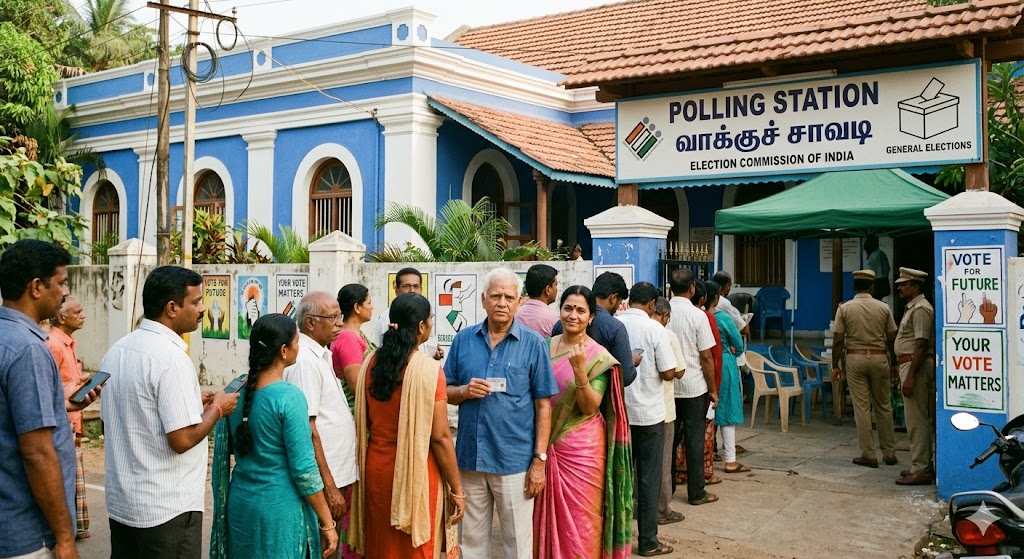
With polling day fast approaching on April 9, 2026, Puducherry finds itself at an important political juncture. The Puducherry assembly elections 2026 will determine the government for the next five years in this 30-member Legislative Assembly. Nearly 9.44 lakh voters, with women slightly outnumbering men, will decide between the ruling NDA alliance and the main opposition Congress-DMK front.
In the Puducherry election 2026, questions of power are closely linked to aspirations for faster development. Residents are evaluating welfare initiatives alongside needs for new industries, improved infrastructure, and greater autonomy. This article explores the major political parties, their strategies, prominent leaders, and development agendas that define the Puducherry polls 2026.
Puducherry, formerly known as Pondicherry, has a vibrant yet volatile political landscape. Alliances often shift, and governments have changed hands several times. In the 2021 elections, the All India N.R. Congress (AINRC) joined hands with the Bharatiya Janata Party (BJP) to form the NDA government. Chief Minister N. Rangasamy has led this coalition since then, relying on central government support for stability and projects.
As the Puducherry assembly elections 2026 near, voices of dissatisfaction have grown. Critics highlight ongoing issues such as limited decision-making powers for the elected government, slow pace of industrial growth, and infrastructure gaps. On the other side, the opposition has come together under the Secular Progressive Alliance, with the Indian National Congress and Dravida Munnetra Kazhagam (DMK) playing central roles.
The Puducherry election 2026 has attracted national interest because the Union Territory frequently reflects trends in southern Indian politics. The outcome may also offer insights into how voters assess governance models that blend local aspirations with central backing.
Official Election Schedule for Puducherry 2026
The Election Commission of India has set a single-phase election for the Puducherry assembly elections 2026. Here are the important dates:
- Gazette Notification: March 16, 2026
- Last Date for Filing Nominations: March 23, 2026
- Scrutiny of Nominations: March 24, 2026
- Last Date for Withdrawal of Candidature: March 26, 2026
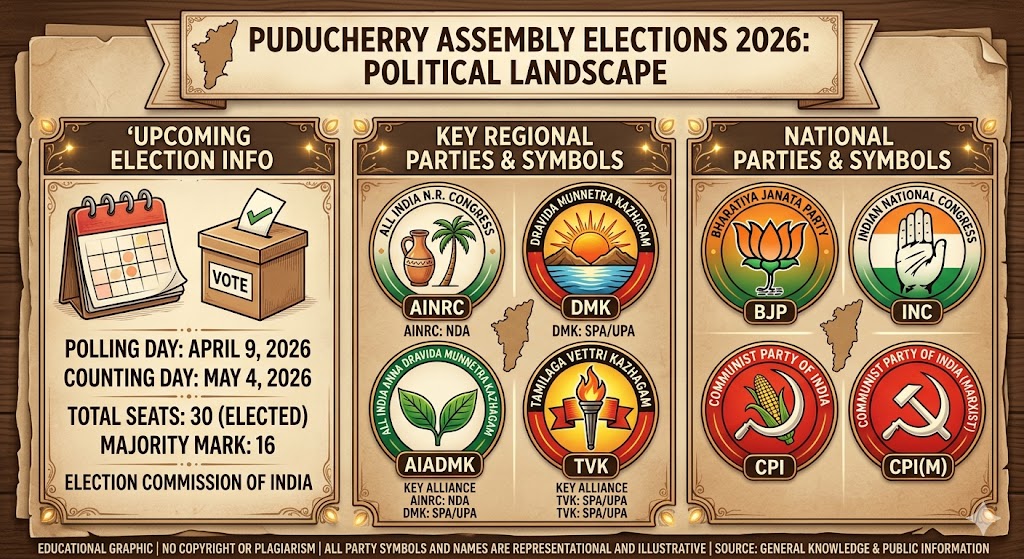
- Polling Date: April 9, 2026 (Thursday)
- Counting of Votes: May 4, 2026
- Completion of Election Process: May 6, 2026
This tight schedule has accelerated campaign activities. Alliances have finalised seat-sharing arrangements, candidates have submitted nominations, and parties are reaching out to voters across all 30 constituencies.
The 2026 elections represent a critical juncture for Puducherry's governance. With the 30-seat assembly at stake, major alliances like the NDA and the SPA/UPA are expected to engage in a high-stakes battle for the majority mark of 16 seats.
Major Political Alliances and Strategies in the Puducherry Election 2026
NDA Alliance: AINRC, BJP and Supporting Partners
The ruling National Democratic Alliance is contesting unitedly. The AINRC, under Chief Minister N. Rangasamy, is fighting on a significant number of seats, while the BJP has been allotted around 10 seats. Other smaller partners, including the Latchiya Jananayaga Katchi (LJK) led by businessman Jose Charles Martin, have joined the alliance, adding new dimensions to the campaign.
The NDA’s approach focuses on five years of stable administration and benefits received from central schemes. Leaders highlight major projects announced during high-level visits and stress the advantages of the “double engine” government model. The inclusion of LJK has brought fresh ideas on urban development and attracting investments, though it initially caused some internal discussions within the alliance.
Congress-DMK Alliance: The Primary Opposition
The opposition front, often aligned with the broader INDIA bloc, features a seat-sharing pact between Congress and DMK. Congress is contesting 16 seats, while DMK will fight on 14 seats, with minor adjustments for other partners. Senior Congress leader and former Chief Minister V. Vaithilingam is leading efforts from the front and is contesting against N. Rangasamy in a key constituency.
This alliance emphasises the need for change and draws inspiration from successful welfare models in neighbouring Tamil Nadu. Campaign messages criticise the current government for not doing enough to bring large industries, create jobs, or ease daily challenges such as traffic congestion. The front promises better use of available funds, stronger local governance, and people-oriented schemes.
Some internal seat-sharing adjustments occurred, but the alliance has largely presented a united face against the incumbents.
Other Contenders
Beyond the two main fronts, Tamilaga Vettri Kazhagam (TVK) is contesting independently in several seats, appealing to voters looking for alternatives. A few independents and smaller regional groups may also influence results in tight contests.
Key Leaders Driving the Campaigns
N. Rangasamy (AINRC): The incumbent Chief Minister and founder of AINRC remains the central figure for the NDA. Known for his focus on welfare and simple public connect, Rangasamy is contesting from constituencies including Thattanchavady. His campaign highlights continued support for women’s schemes, education, healthcare, and central-assisted infrastructure projects. He also addresses the long-standing demand for statehood while stressing realistic governance.
V. Vaithilingam (Congress): A veteran politician and former Chief Minister, Vaithilingam serves as a key opposition voice. As president of the Puducherry Pradesh Congress Committee, he is actively campaigning and directly challenging the ruling dispensation in prominent seats.
Other important voices include BJP state unit leaders promoting central welfare programmes, DMK representatives focusing on Dravidian-style social justice, and LJK’s leadership bringing a business and modernisation perspective.
Development Agendas: What Parties Are Promising
Development remains at the heart of the Puducherry assembly elections 2026.
The NDA is campaigning on continuity and accelerated progress through central partnerships. Key promises include expanding existing welfare measures, strengthening education and health services, and encouraging small and medium enterprises. The alliance points to completed road works, tourism initiatives, and digital governance improvements. LJK’s involvement has added emphasis on modern urban planning and making Puducherry more attractive for investors.
The Congress-DMK alliance presents a contrasting vision centred on inclusive growth and local empowerment. It pledges enhanced support for women and marginalised sections, skill development to address unemployment, and targeted infrastructure upgrades. Leaders often reference successful models from Tamil Nadu to argue for faster project implementation and greater administrative powers for the elected government. Both major fronts have included the demand for statehood in their platforms, though achieving it remains a complex constitutional challenge.
Smaller parties stress transparency, anti-corruption steps, and fresh approaches to governance that appeal especially to younger voters.
Major Issues Shaping Voter Choices in Puducherry Election 2026
Several critical topics are dominating discussions:
1. Demand for Statehood: Nearly all major parties mention this goal. Voters seek more legislative and financial autonomy, but constitutional and political realities make it difficult to achieve quickly.
2. Employment and Industrial Growth: High youth unemployment and the absence of big industries are repeated concerns. Parties are promising skill training centres, investment incentives, and tourism expansion.
3. Infrastructure Challenges: Traffic problems, public transport gaps, and uneven development between urban and rural areas continue to affect daily life.
4. Welfare and Sustainable Progress: While direct benefit schemes remain popular, there is increasing demand for long-term investments in quality education, healthcare, and environmentally balanced growth.
5. Centre-Union Territory Relations: The balance between central funding and local decision-making powers is a recurring theme, especially given Puducherry’s special administrative status.
Puducherry Assembly Elections 2026: The Political Landscape
Lessons from Past Elections
Puducherry’s electoral record shows that alliances often prove more important than individual party strength. The 2021 result favoured the AINRC-BJP combination after opposition votes were split. Earlier cycles saw Congress-led fronts in power. The Puducherry election 2026 will reveal whether incumbency advantages can withstand growing demands for change or whether voters will prefer a new combination.
High voter turnout and the influence of local leaders in key seats have historically decided outcomes.
Possible Results and Their Impact on Puducherry’s Future
The verdict on April 9 (with results on May 4) will set the direction for the coming years. An NDA victory would likely continue the focus on central-supported projects and steady welfare measures, while pressure for greater autonomy may increase. A Congress-DMK success could bring policy shifts emphasising broader social welfare and stronger local governance.
Regardless of who wins, the real challenge will be converting promises into visible improvements while preserving Puducherry’s unique cultural character and natural beauty.
Conclusion
The Puducherry election 2026 is ultimately about more than seats—it is a choice about the kind of development and governance people want. As campaigns reach their final stages, voters will assess past performance, current promises, and the credibility of those seeking power.
On polling day, the people of Puducherry will decide the next chapter for their Union Territory. Their verdict will influence not only who holds office but also how effectively that power is used to deliver meaningful progress for all sections of society.
Frequently Asked Questions
What is the primary significance of Puducherry 2026 Elections: Battle for Power and Development?
With polling day fast approaching on April 9, 2026, Puducherry finds itself at an important political juncture. The Puducherry assembly elections 2026 will determine the government for the next five years in this 30-member Legislative Assembly.
How does this development impact Politics?
Nearly 9.44 lakh voters, with women slightly outnumbering men, will decide between the ruling NDA alliance and the main opposition Congress-DMK front.In the Puducherry election 2026, questions of power are closely linked to aspirations for faster development. Residents are evaluating welfare initiatives alongside needs for new industries, improved infrastructure, and greater autonomy.
What are the key future projections to monitor?
This article explores the major political parties, their strategies, prominent leaders, and development agendas that define the Puducherry polls 2026.Background of the Puducherry Assembly Elections 2026Puducherry, formerly known as Pondicherry, has a vibrant yet volatile political landscape.