Trump in Beijing: Trump-Xi Summit 2026 amid war situation
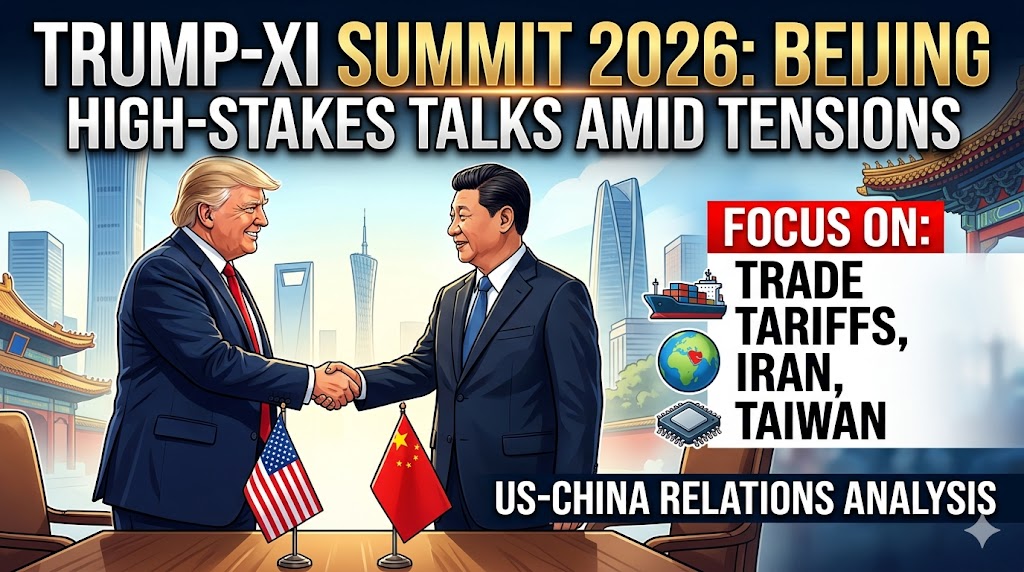
A Historic Visit Amid Global Tensions
President Donald Trump touched down in Beijing on what marks a significant moment in international diplomacy. As the 47th President of the United States, Trump has arrived for high-stakes talks with Chinese President Xi Jinping. The agenda is packed with pressing issues, including escalating tensions surrounding Iran and the persistent challenges of trade tariffs that have defined much of the economic relationship between the world's two largest economies.
This Trump China visit comes at a delicate juncture. With the shadow of conflict in the Middle East looming and trade frictions still fresh from previous rounds of negotiations, both leaders are under pressure to deliver tangible results. Observers around the globe are watching closely, wondering whether this summit will stabilize relations or highlight deepening divides.
The arrival in Beijing signals a continuation of personal diplomacy that characterized Trump's first term. Those who have followed US-China relations note that the rapport between Trump and Xi has often been a stabilizing factor, even as underlying strategic competitions persist. In the days leading up to the meetings, both sides emphasized the importance of maintaining open communication channels.
Background: The Road to Beijing
To fully appreciate the significance of this Trump Xi summit, it is essential to look back at the evolution of bilateral ties. Trump's return to the White House in 2025 brought renewed focus on "America First" policies, particularly in trade. Tariffs once again became a central tool in addressing what the administration views as unfair trade practices.
The previous trade war left scars on global supply chains. Chinese exporters faced higher costs entering the US market, while American consumers and businesses dealt with increased prices on a wide range of goods. A fragile truce was reached in late 2025, but many issues remained unresolved. This Trump in Beijing visit provides an opportunity to build on that temporary agreement or renegotiate key terms.
Iran adds another complex layer. Recent developments in the Middle East have raised concerns about energy security, shipping routes through the Strait of Hormuz, and potential spillover effects on global stability. China, as a major importer of Iranian oil and a player with significant influence in the region, finds itself in a position where its actions—or inactions—could shape outcomes. Trump has publicly downplayed the need for direct Chinese assistance on Iran but is expected to press for cooperation in preventing escalation.
The schedule includes formal meetings, a state banquet, and cultural visits, such as to the Temple of Heaven. These elements blend high-level policy discussions with symbolic gestures of respect, typical of such state visits.
Key Issues on the Agenda
Trade Tariffs and Economic Cooperation
Trade remains at the heart of the Trump Xi summit. The US continues to run a substantial trade deficit with China. Trump has long argued that this imbalance harms American workers and industries. During his campaign and early second term, he pushed for higher tariffs on certain Chinese imports to protect domestic manufacturing.
Chinese officials, for their part, have stressed the mutual benefits of open trade while expressing frustration over what they see as protectionist measures. Negotiators on both sides are likely discussing extensions or modifications to the existing tariff truce. Potential areas of agreement include increased Chinese purchases of US agricultural products, energy, and aircraft.
Analysts point to critical minerals and rare earths as particularly sensitive topics. China holds significant leverage in these supply chains, which are vital for technology, defense, and green energy sectors. Any progress here could ease tensions and provide certainty for businesses on both sides of the Pacific.
Beyond tariffs, discussions may cover investment frameworks, intellectual property protections, and market access. American companies have long sought greater opportunities in the Chinese market, while Beijing aims to attract foreign capital amid its own economic challenges.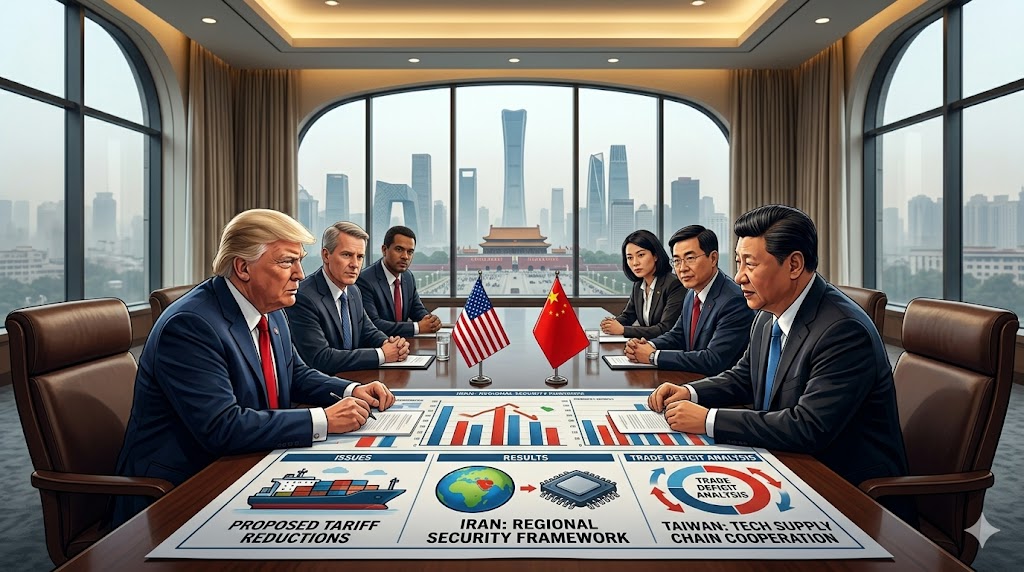
meeting in Beijing
The Iran Question and Geopolitical Stability
Tensions regarding Iran form another critical pillar of the talks. The ongoing situation in the Middle East has disrupted global energy markets and raised fears of broader conflict. Trump administration officials have engaged with China on this issue in recent months, acknowledging Beijing's relationships in the region.
China has called for diplomatic solutions and criticized certain unilateral actions. At the same time, Beijing has an interest in keeping vital sea lanes open for its energy imports. The Trump China visit offers a platform to align positions on de-escalation and humanitarian aspects, even if fundamental differences remain.
Experts suggest that quiet coordination in Iran could serve as a confidence-building measure, potentially spilling over into other areas like Taiwan or the South China Sea. However, neither side is expected to make major concessions publicly.
Taiwan, Technology, and Strategic Competition
While not always headline-grabbing in pre-summit coverage, Taiwan and technology issues lurk in the background. The US maintains its commitment to Taiwan's defense capabilities under longstanding policy, a point of friction with Beijing, which views the island as part of its territory.
Artificial intelligence, semiconductors, and export controls represent another frontier. Both nations are investing heavily in technological superiority. The summit may include discussions on managing competition to avoid unintended escalations in the tech domain.
Historical Context of Trump-Xi Engagements
This is not the first time Trump and Xi have met in Beijing. During Trump's first presidency, he visited China in 2017, where grand ceremonies underscored the personal relationship between the two leaders. That visit also focused heavily on trade and North Korea.
Subsequent meetings at international forums, including the 2025 APEC summit in South Korea, helped manage tensions during periods of strain. The current Trump Xi summit builds on this history, with both leaders familiar with each other's negotiating styles. Trump often favors bold statements and deal-making flair, while Xi emphasizes long-term strategic thinking and stability.
Many diplomats credit these personal interactions with preventing worse outcomes during turbulent times. Yet challenges have grown more complex with evolving global realities.
Economic Implications for Global Markets
The outcomes of this summit could ripple across world markets. Stock exchanges in New York, Shanghai, and beyond often react to news from US-China talks. A positive signal on tariffs could boost investor confidence, while prolonged uncertainty might weigh on sectors dependent on bilateral trade.
For American farmers and manufacturers, clearer trade rules would provide much-needed predictability. Chinese businesses, facing domestic headwinds, look for assurances against sudden policy shifts.
Energy prices are another watchpoint, given Iran's role in oil markets. Any agreements that help stabilize the region could ease pressures on consumers worldwide.
Potential Outcomes and Challenges
Optimistic scenarios include announcements of new purchase agreements, extensions of the trade truce, and joint statements on diplomatic engagement regarding Iran. Such results would allow both leaders to claim victories for their domestic audiences.
More cautious observers note structural differences that are hard to bridge in a single visit. Issues like subsidies, state-owned enterprises, and human rights occasionally surface but are often handled delicately in leader-level talks.
The personal chemistry between Trump and Xi will play a role. Past encounters suggest they can find common ground on broad principles even when details prove elusive.
Broader Context: US-China Relations in a Multipolar World
This Trump in Beijing visit occurs against a backdrop of shifting global power dynamics. The rise of other players, regional conflicts, and challenges like climate change require cooperation between Washington and Beijing, even as competition defines much of the relationship.
Experts describe the current era as "competitive coexistence," where both nations manage rivalry while collaborating where interests align. Success in Beijing could set a positive tone for the remainder of Trump's term and beyond.
What to Watch During the Visit
As meetings unfold, key signals will include the tone of joint statements, specific commitments on trade volumes, and any mentions of follow-up mechanisms like a new bilateral trade board. Cultural exchanges and the warmth of the reception will also carry symbolic weight.
Media coverage will scrutinize body language, seating arrangements at banquets, and post-meeting press interactions for clues about the private discussions.
Conclusion: Charting a Path Forward
President Trump's arrival in Beijing for talks with Xi Jinping represents more than a diplomatic formality. It is a high-stakes endeavor touching on economic prosperity, regional security, and the future shape of international order.
With tensions over Iran and trade tariffs in sharp focus, the world hopes for pragmatic progress. Whether the summit yields breakthrough agreements or modest steps toward stability, it underscores the indispensable nature of US-China dialogue.
As details emerge from the meetings, stakeholders across industries, governments, and civil society will assess the long-term impact. For now, the Trump Xi summit stands as a critical chapter in the ongoing story of two nations whose choices profoundly influence global affairs.