Iran’s April 2026 Hypersonic Missile Tests: Capabilities.
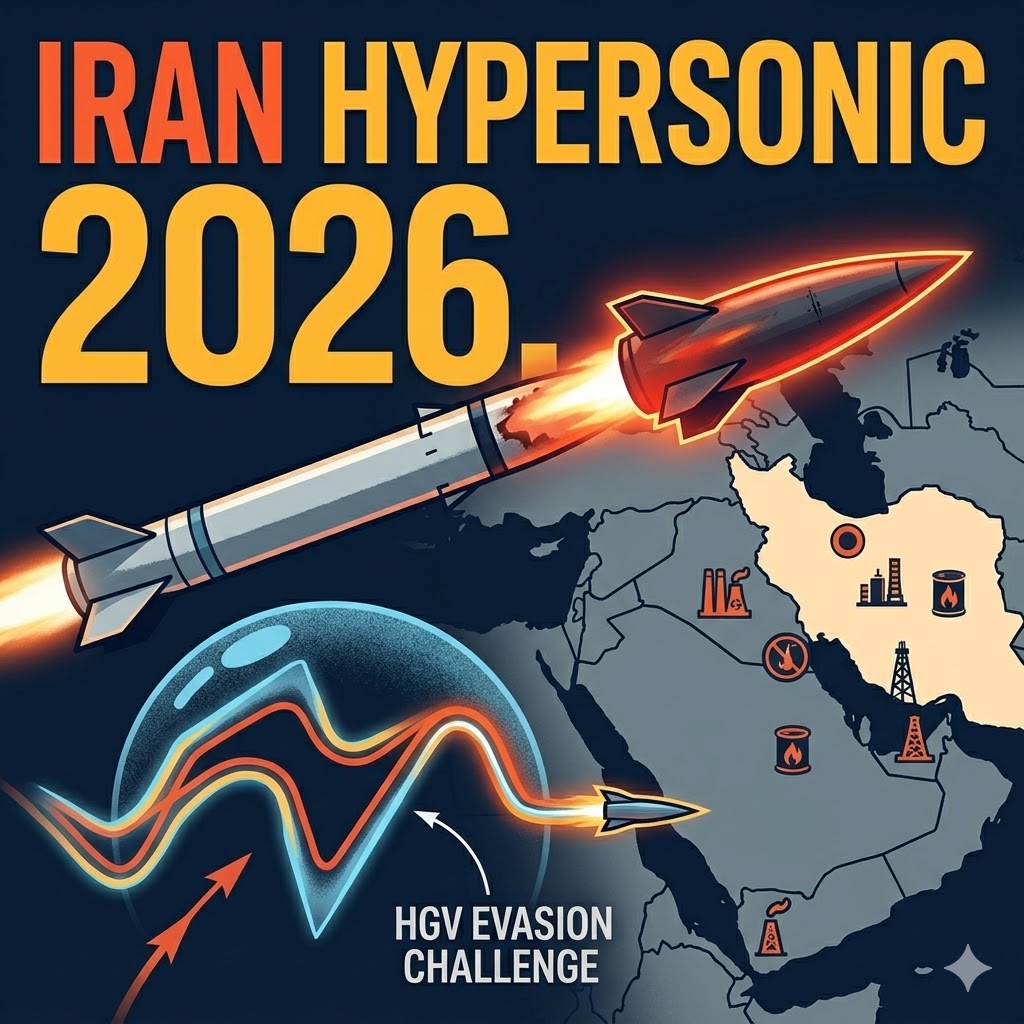
In April 2026, as regional tensions remained high following earlier direct confrontations, Iran announced and reportedly carried out further tests of its indigenous hypersonic missile systems. These developments, centered around the advanced Fattah family of missiles, marked another milestone in Tehran’s long-standing effort to build a robust domestic defense industry capable of deterring superior conventional forces.
The tests came at a time of fragile ceasefires and ongoing proxy dynamics, underscoring Iran’s determination to enhance its asymmetric warfare capabilities. This article provides a detailed examination of the technical aspects, historical development, strategic significance, and broader implications of Iran’s hypersonic missile program, with particular focus on the April 2026 activities.
Iran’s missile journey began in earnest during the Iran-Iraq War in the 1980s, when it faced devastating attacks and turned to foreign suppliers, primarily from North Korea and China, for Scud variants. Over the decades, the Islamic Revolutionary Guard Corps (IRGC) Aerospace Force spearheaded efforts toward self-reliance, investing heavily in solid-fuel propulsion, guidance systems, and maneuverable re-entry vehicles.
By the early 2020s, Iran had unveiled an array of ballistic missiles with increasing ranges and accuracies. The announcement of the Fattah-1 in June 2023 represented a claimed breakthrough into hypersonic technology. Iranian officials described it as a “generational leap,” boasting speeds of Mach 13-15 and the ability to maneuver outside and within the atmosphere to evade missile defenses.
The Fattah-2 followed in late 2023, introducing a hypersonic glide vehicle (HGV) design that promised even greater maneuverability. These systems built upon earlier platforms like the Sejjil and Kheibar Shekan, incorporating lessons from operational use in regional conflicts. By 2025, Iran had integrated elements of these technologies into its arsenal, setting the stage for more advanced demonstrations in 2026.
Technical Specifications and April 2026 Tests
The April 2026 tests reportedly focused on refining the Fattah-2 and related variants under realistic operational conditions. According to Iranian state media and military statements, the exercises involved multiple launches showcasing mid-flight trajectory alterations, high terminal velocities, and precision strikes on simulated targets.
Key claimed specifications for the Fattah series include:
Speed: Up to Mach 15 (approximately 18,000 km/h)
Range: Around 1,400-1,500 km, sufficient to reach key regional targets
Maneuverability: Hypersonic glide vehicle allowing course corrections during atmospheric re-entry
Warhead: Conventional high-explosive or potentially cluster munitions
Launch Platform: Road-mobile transporter erector launchers (TELs) for high survivability
Analysts note that while exact performance details remain classified and subject to verification challenges, the April tests demonstrated improved guidance accuracy and successful evasion simulations against layered air defense scenarios. Footage released showed smooth separations of stages and stable glide phases, though independent confirmation of full hypersonic performance is inherently difficult due to the speeds involved.
These tests differed from earlier demonstrations by incorporating multi-vector launches and integration with drone swarms, suggesting a maturing “system of systems” approach designed to overwhelm defensive networks.
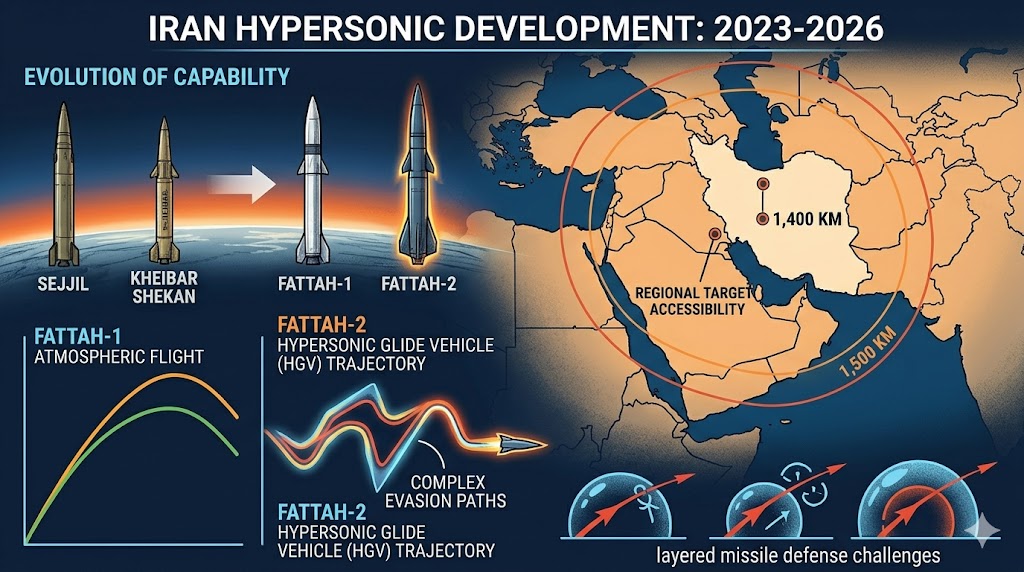
Evolution of a Hypersonic Threat
Strategic Doctrine and Role in Asymmetric Warfare
Iran’s hypersonic ambitions align with a broader doctrine of deterrence through denial and punishment. Facing potential adversaries with advanced air and missile defenses, Tehran has prioritized weapons that can complicate interception calculations. Hypersonic systems, with their combination of speed and unpredictable paths, theoretically reduce the reaction time available to interceptors like Patriot, Arrow, or THAAD.
In the context of April 2026, these tests served both military and political purposes. They signaled resolve amid ongoing diplomatic maneuvering and reinforced the IRGC’s narrative of technological independence under sanctions. For domestic audiences, they highlighted national pride in scientific achievement. For international observers, they raised questions about the evolving balance of power in the Persian Gulf and Levant.
Regional Security Implications
The development and testing of these missiles have ripple effects across the Middle East. Israel views them as a direct threat to its population centers and strategic installations, prompting continued investment in multi-layered defenses and potential preemptive considerations. Gulf states, many hosting U.S. bases, express quiet concern over the vulnerability of critical infrastructure, including energy facilities near the Strait of Hormuz.
The proximity of hypersonic-capable systems increases escalation risks. A successful penetration of defenses could trigger rapid retaliatory cycles, with limited time for de-escalation. This dynamic has accelerated discussions on integrated air and missile defense cooperation among Gulf Cooperation Council members and their partners.
Global Reactions and Arms Race Dynamics
Major powers have monitored Iran’s progress closely. The United States, already grappling with its own hypersonic development timelines, responded to regional tests by considering forward deployment of systems like the Dark Eagle. Russia and China, with established hypersonic programs, offer a contrasting model that Iran may draw inspiration from, though technological transfers remain limited by sanctions.
The April 2026 tests have fueled debates in international forums about missile proliferation and the need for updated arms control mechanisms. While traditional treaties focus on longer-range systems, the spread of medium-range hypersonic technology poses new challenges for stability.
Challenges and Limitations
Despite impressive claims, several technical and operational hurdles persist. Sustaining hypersonic speeds generates extreme heat, requiring advanced materials science. Guidance and communications in plasma sheaths during high-speed flight remain complex engineering problems. Production scalability under sanctions also constrains inventory sizes.
Independent analysts often caution that claimed performance may exceed verified results, a common pattern in defense announcements worldwide. Combat effectiveness would ultimately be tested in real-world conditions against active countermeasures, electronic warfare, and cyber disruptions.
Future Outlook and Technological Trajectory
Looking ahead, Iran is expected to continue iterating on the Fattah platform, potentially extending ranges, improving seeker technologies, and exploring sea-based or air-launched variants. Integration with artificial intelligence for autonomous targeting could further enhance capabilities in contested environments.
For the region, these advancements may drive a qualitative arms race, with states investing in directed energy weapons, advanced sensors, and space-based early warning as counters. Diplomatic efforts to establish confidence-building measures around missile activities could help mitigate risks, though deep-seated mistrust complicates progress.
Economic and Industrial Dimensions
Iran’s missile program represents a significant domestic industry, employing thousands of engineers and technicians while reducing reliance on imports. State-backed entities have developed expertise in composite materials, propulsion, and precision manufacturing that spills over into civilian sectors, albeit under heavy international restrictions.
The April 2026 tests likely served as validation milestones for further investment, demonstrating return on decades of sustained effort despite economic pressures.
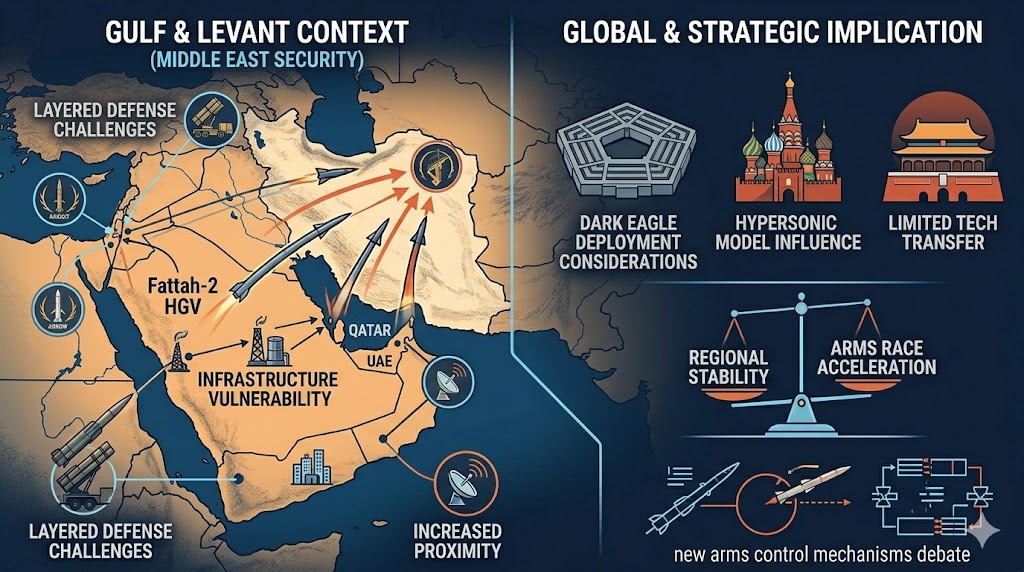
Strategic Balancing Act in the Middle East
Conclusion
Iran’s indigenous hypersonic missile tests in April 2026 highlight the country’s persistent drive toward advanced military capabilities amid a volatile regional landscape. The Fattah series and associated systems embody both technological aspiration and strategic signaling, with the potential to reshape deterrence calculations across the Middle East.
While questions remain about full operational maturity, the trajectory is clear: hypersonic weapons are becoming an integral part of Iran’s defense posture. As nations navigate this new reality, balancing deterrence, defense modernization, and diplomatic engagement will be crucial to preventing miscalculation and fostering long-term stability in one of the world’s most critical regions.
Sustained monitoring, transparent analysis, and multilateral dialogue offer the best path forward in managing the proliferation and impact of these transformative technologies.