Exercise Desert Tiger 2026: Malaysia-UAE Military Ties
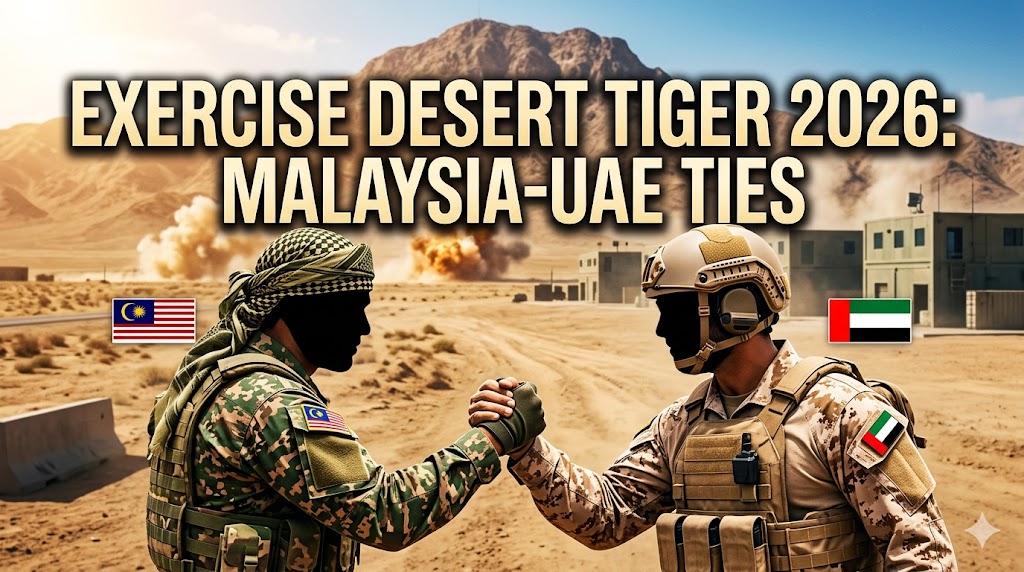
In February 2026, the United Arab Emirates hosted Exercise Desert Tiger, a significant bilateral military drill that underscored the deepening defence partnership between Malaysia and the UAE. This joint exercise brought together ground forces from both nations to hone their capabilities in desert terrain, with a particular focus on operations in built-up areas (OBUA). As global security challenges evolve, such collaborative training initiatives play a vital role in promoting regional stability and operational readiness.
Exercise Desert Tiger 2026 highlighted the commitment of both countries to professional military development and interoperability. Malaysian troops, primarily from the 7th Battalion of the Royal Ranger Regiment, trained alongside UAE forces in realistic scenarios that tested their adaptability, tactics, and coordination in harsh desert environments. The successful completion of the exercise not only boosted the skills of participating personnel but also reinforced the strategic bonds between Kuala Lumpur and Abu Dhabi.
This article explores the background, objectives, execution, and broader implications of Exercise Desert Tiger 2026. It examines how this drill fits into the larger framework of Malaysia-UAE defence relations and its relevance in today’s geopolitical context.
Historical Context of Malaysia-UAE Defence Cooperation
Malaysia and the United Arab Emirates have cultivated robust defence ties over the past decades, driven by shared interests in regional security, counter-terrorism, and capacity building. The Desert Tiger series of exercises dates back several years, serving as a cornerstone of their military-to-military engagement.
Previous editions, such as Desert Tiger 6, demonstrated high levels of professionalism and were even witnessed by top leaders, including the UAE President and the Malaysian King. These drills have consistently emphasized urban operations in desert settings, reflecting the unique operational environments both nations might face in future missions.
The relationship extends beyond exercises to include equipment procurement, training exchanges, and strategic dialogues. For Malaysia, engagement with the UAE provides exposure to advanced desert warfare doctrines and modern military technologies. For the UAE, partnering with Malaysian forces brings valuable perspectives from Southeast Asian operational experiences and peacekeeping expertise.
By 2026, this partnership had matured significantly amid shifting global dynamics, including concerns over maritime security, extremism, and the need for diversified alliances in the Indo-Pacific and West Asian regions.
Objectives and Scope of Exercise Desert Tiger 2026
The primary goals of Exercise Desert Tiger 2026 included:
Enhancing interoperability between Malaysian and UAE land forces.
Improving tactical proficiency in operations in built-up areas within desert environments.
Facilitating the exchange of doctrines, tactics, techniques, and procedures (TTPs).
Building mutual understanding and professional bonds among participating troops.
Preparing forces for potential United Nations or coalition operations in similar terrains.
Approximately 101 Malaysian personnel, including 15 officers and 86 other ranks from the 7th Battalion Royal Ranger Regiment, participated. The exercise took place in Ajman and other training facilities in the UAE, leveraging state-of-the-art simulation and live training grounds.
Training modules covered a wide spectrum: urban combat drills, desert survival techniques, joint patrolling, intelligence sharing, logistics coordination, and medical evacuation procedures under challenging conditions. Emphasis was placed on realistic scenarios involving close-quarters battle, room clearance, and integrated fire support in urban-desert hybrids.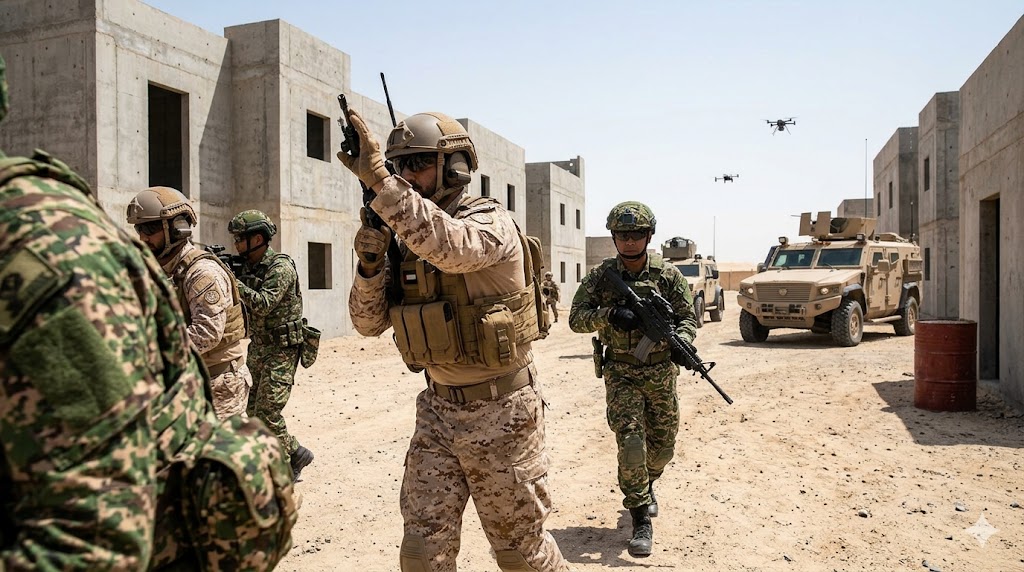
Exercise Desert Tiger 2026: Tactical Coordination in Built-Up Areas.
Execution and Key Activities
Exercise Desert Tiger 2026 unfolded in phases, beginning with familiarization and theoretical sessions before progressing to field exercises. Early stages focused on cultural and doctrinal exchanges, allowing participants to understand each other’s standard operating procedures.
Subsequent phases involved intensive practical training. Troops conducted live-fire exercises, simulated hostage rescue operations, and large-scale urban assaults in mock towns constructed within desert landscapes. UAE forces shared expertise in advanced desert mobility and surveillance, while Malaysian contingents contributed insights from jungle-to-desert transition tactics and multinational peacekeeping operations.
One standout element was the integration of modern technology, including drones for reconnaissance, night-vision equipment, and communication systems that ensured seamless coordination despite language and procedural differences. Cross-training sessions allowed Malaysian soldiers to operate UAE equipment and vice versa, fostering adaptability.
The exercise culminated in a validation phase where combined Malaysian-UAE teams executed complex missions under observation by senior officers. Performance was evaluated on metrics such as mission success rate, time efficiency, casualty management, and overall coordination.
Defence Minister Datuk Seri Mohamed Khaled Nordin highlighted the exercise’s success in enhancing readiness and professionalism while strengthening bilateral ties.
Strategic Significance in Regional Security
Exercise Desert Tiger 2026 occurs against a backdrop of complex regional security dynamics. The UAE plays a pivotal role in Gulf stability and broader Middle East peace efforts. Malaysia, as a prominent Muslim-majority nation with active roles in ASEAN and global peace keeping, brings complementary strengths.
The drill contributes to capacity building for potential joint deployments in humanitarian assistance, disaster relief, or stabilization missions. It also signals to other nations the seriousness with which both countries approach defence preparedness.
In the larger context of West Asian and Southeast Asian security convergence, such exercises help counter non-traditional threats like terrorism, piracy, and hybrid warfare. They also support economic ties, as defence cooperation often paves the way for broader trade and investment in aerospace, technology, and infrastructure.
Comparison with Other Bilateral Exercises
While Desert Tiger focuses on army-level ground operations in desert-urban settings, it complements other Malaysia-UAE engagements and parallels India’s own exercises with the UAE, such as Desert Cyclone. These varied drills create a web of interconnected capabilities across partner nations.
For Malaysia, Desert Tiger adds to its portfolio alongside exercises with countries like Indonesia, Thailand, and the United States. The UAE, known for hosting multinational drills like Desert Flag, uses the Desert Tiger series to deepen specific bilateral relationships.
Benefits for Participating Forces
For Malaysian troops, the exercise offered invaluable exposure to arid conditions vastly different from their usual tropical environments. Skills gained in desert navigation, heat management, and equipment maintenance in sandy conditions will prove useful in future deployments.
UAE forces benefited from interacting with a professional army known for discipline and adaptability. The exchange of perspectives enriched both sides’ tactical repertoires.
On a personal level, the camaraderie developed during intense training fosters long-term professional networks that can facilitate future cooperation.
Technological and Doctrinal Innovations
Modern iterations of Desert Tiger incorporate cutting-edge elements. Unmanned aerial systems (UAS), counter-drone measures, and data-linked command systems featured prominently in 2026 training. These tools reflect the evolving nature of warfare, where technology multiplies human capabilities.
Doctrinal exchanges likely covered hybrid threats, information operations, and civil-military coordination—areas critical in contemporary conflicts.
Challenges and Lessons Learned
Joint exercises are not without challenges. Differences in equipment standards, command languages (though English serves as a common medium), and operational cultures require careful management. Logistical coordination for international troop movements and sustainment in remote desert areas also demands meticulous planning.
Exercise Desert Tiger 2026 provided opportunities to identify and address such gaps, leading to refined standard operating procedures for future collaborations.
Broader Implications for Malaysia-UAE Relations
Defence ties form one pillar of a multifaceted relationship encompassing economics, education, tourism, and cultural exchanges. Successful military exercises like Desert Tiger enhance trust and open avenues for advanced cooperation, potentially including joint ventures in defence manufacturing or technology transfer.
For Malaysia, stronger links with the UAE diversify its strategic partnerships beyond traditional Western and regional allies. For the UAE, engagement with Malaysia supports its vision of a modern, globally connected armed forces.
Future Prospects and Recommendations
Looking ahead, the Desert Tiger series is expected to continue with increasing complexity, possibly incorporating naval or air components for tri-service integration. Both nations could explore observer participation from other friendly countries to expand the exercise’s scope.
Recommendations for maximizing benefits include:
Regular pre-exercise virtual planning sessions.
Joint development of training modules.
Post-exercise knowledge-sharing seminars.
Integration of humanitarian and disaster relief scenarios.
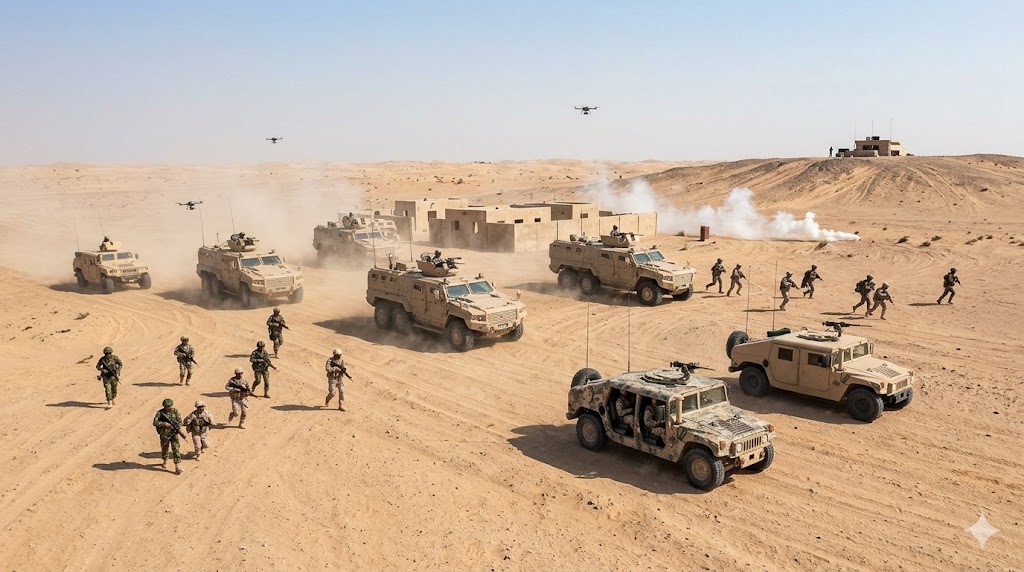
Desert Tiger 2026: Combined Forces Execute a Simulated Urban Assault
Conclusion
Exercise Desert Tiger 2026 stands as a testament to the strong and growing defence partnership between Malaysia and the United Arab Emirates. Through rigorous training in desert urban operations, both nations have enhanced their military interoperability, professional standards, and readiness to address shared security challenges.
As the world navigates uncertain geopolitical waters, collaborative initiatives like Desert Tiger contribute meaningfully to peace and stability. The bonds forged in the sands of the UAE will undoubtedly support future cooperation across multiple domains.
For defence analysts, policymakers, and military enthusiasts, this exercise offers valuable insights into how middle powers are adapting to contemporary security demands through smart partnerships. As the series evolves, Exercise Desert Tiger will continue to play a key role in shaping the defence landscape of both nations and the wider region.
The success of Desert Tiger 2026 reaffirms that through joint effort, dedication, and mutual respect, countries can build capabilities that extend far beyond the training ground—ultimately contributing to a more secure and prosperous world.