Exercise The "Varuna" 2026: India France Naval Drill
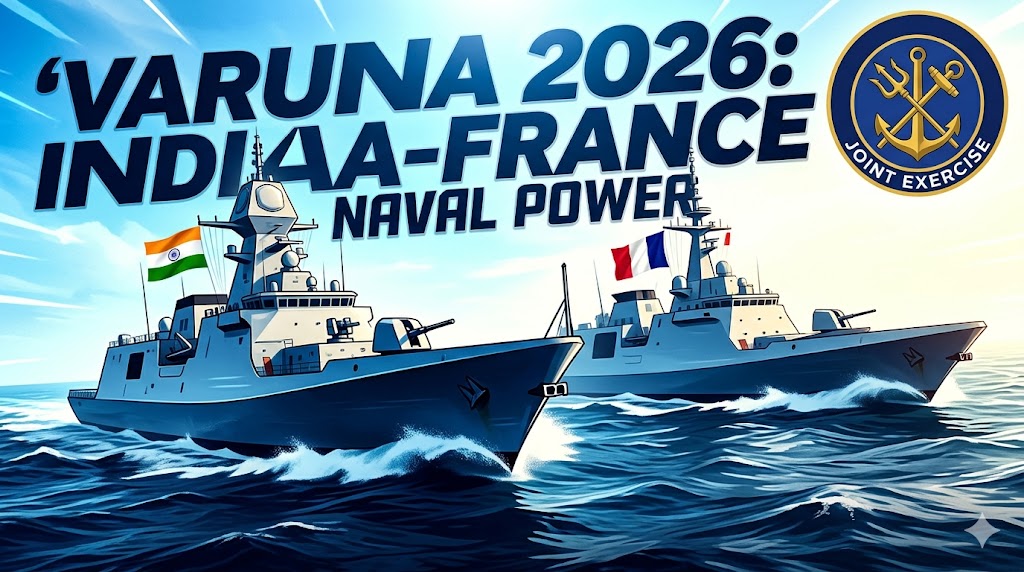
The enduring strategic partnership between India and France continues to evolve in the maritime domain with Exercise Varuna 2026, the latest iteration of one of the most sophisticated bilateral naval drills in the Indo-Pacific. Conducted annually since its formal naming in 2001, this exercise brings together the Indian Navy and the French Navy to refine operational tactics, enhance interoperability, and demonstrate a shared commitment to maritime security and stability.
As global maritime challenges grow more complex — ranging from traditional naval threats to non-traditional issues like piracy, illegal fishing, and climate-induced disruptions — exercises like Varuna play a crucial role in building trust and capability between like-minded navies. The 2026 edition, anticipated to feature advanced multi-domain operations, underscores the deepening defence ties between the two nations and their mutual interest in a free and open Indo-Pacific.
This article provides a comprehensive examination of Exercise Varuna 2026, its historical evolution, strategic objectives, key components, and broader geopolitical significance. Through detailed analysis, it highlights how this naval collaboration contributes to regional peace and operational excellence.
Historical Evolution of Exercise Varuna
The roots of Exercise Varuna trace back to 1983, when the Indian and French navies first began conducting joint manoeuvres. Initially modest in scope, these drills gained formal identity as Varuna in 2001, named after the Hindu god of seas and oceans. Over the decades, the exercise has transformed from basic tactical training into a high-end, multi-faceted naval engagement.
Early editions focused primarily on surface warfare and basic coordination. By the 2010s, the scope expanded significantly to include anti-submarine warfare (ASW), air defence, live-fire exercises, and carrier operations. Landmark editions, such as those involving aircraft carriers like INS Vikrant and Charles de Gaulle, marked major milestones in joint carrier strike group operations.
The 2025 edition (23rd) in the Arabian Sea exemplified this progression, featuring two aircraft carriers, destroyers, frigates, a Scorpene-class submarine, and maritime patrol aircraft. Building on this momentum, Exercise Varuna 2026 is expected to further elevate complexity with advanced integration of unmanned systems, cyber-resilient communications, and cross-domain operations.
This consistent progression reflects the maturity of the India-France strategic partnership, elevated to a comprehensive strategic level over the years through agreements on defence, space, and nuclear cooperation.
Strategic Objectives of Exercise Varuna 2026
Exercise Varuna 2026 is designed with several core objectives that align with both nations’ broader security goals:
Enhancing interoperability between the Indian Navy and French Navy across surface, sub-surface, and air domains.
Refining tactics for anti-submarine warfare, air defence, and maritime interdiction in contested environments.
Improving coordination in humanitarian assistance, disaster relief (HADR), and non-combatant evacuation operations.
Demonstrating commitment to freedom of navigation and adherence to international maritime law.
Facilitating the exchange of best practices in naval technology and operational doctrines.
In an era of increasing great-power competition, the exercise also serves as a visible signal of Indo-French resolve to maintain stability in critical sea lanes, particularly in the Indian Ocean Region (IOR), where France maintains territories and strategic interests.
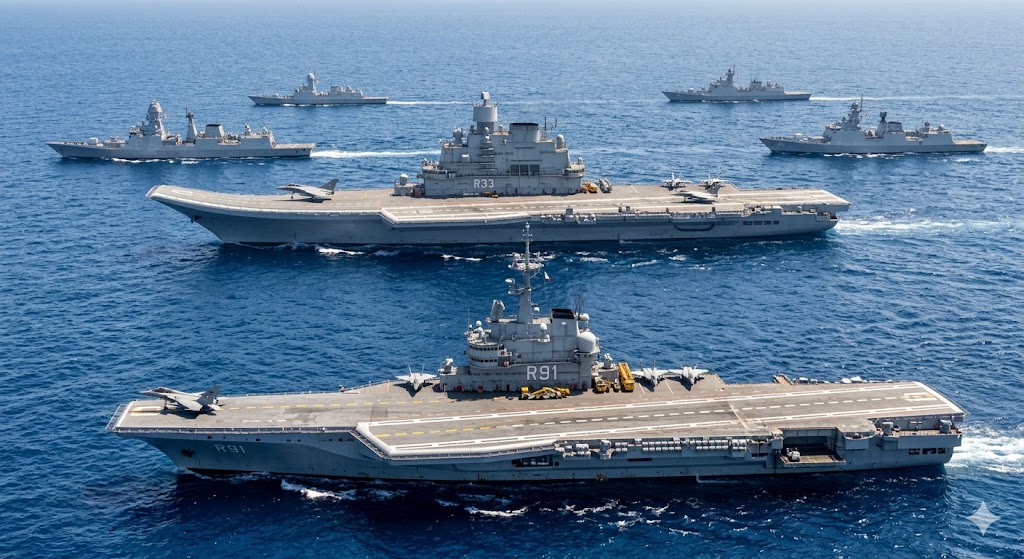
Exercise Varuna 2026: Enhancing Sub-surface Domain Awareness.
Key Components and Training Modules
Exercise Varuna 2026 typically unfolds in phases, combining harbour and sea phases for comprehensive skill development.
Harbour Phase: This segment focuses on planning, briefings, and professional exchanges. Officers and specialists from both navies discuss operational doctrines, share intelligence on regional threats, and conduct table-top simulations. Cultural and sports events further strengthen interpersonal bonds among participants.
Sea Phase: The core of the exercise involves dynamic at-sea manoeuvres. Key activities include:
Advanced tactical formations and replenishment-at-sea (RAS) operations.
Anti-submarine warfare drills with submarines and maritime patrol aircraft.
Air defence exercises involving fighter aircraft from carriers or shore bases.
Cross-deck helicopter landings and joint search-and-rescue missions.
Live-fire gunnery and missile firing exercises (where feasible).
Integration of unmanned aerial and surface vehicles for reconnaissance and targeting.
The inclusion of aircraft carriers in recent editions adds significant value, allowing practice of carrier strike group coordination, which is vital for power projection and sustained operations far from home bases.
Participating Assets and Technological Integration
While specific asset details for the 2026 edition are confirmed closer to the event, past patterns suggest substantial involvement:
Indian Navy: Aircraft carrier (INS Vikrant or Vikramaditya), destroyers like INS Kolkata class, frigates, Scorpene-class submarines, P-8I maritime patrol aircraft, and helicopters.
French Navy: Elements from the Carrier Strike Group, including Charles de Gaulle when available, frigates, submarines (such as Suffren-class), and Rafale Marine aircraft.
Modern iterations increasingly incorporate cutting-edge technologies: network-centric warfare systems, AI-assisted decision-making tools, and robust cyber defence measures. These elements prepare both navies for future conflicts where information dominance and multi-domain integration will be decisive.
Geopolitical Significance and Indo-Pacific Strategy
Exercise Varuna 2026 occurs within a broader strategic context. India’s Act East Policy and SAGAR (Security and Growth for All in the Region) vision align closely with France’s Indo-Pacific strategy. Both countries view the region as vital for global trade and security, with over 50% of world shipping passing through Indian Ocean routes.
The exercise complements other bilateral and multilateral frameworks, including the Quad, MILAN, and trilateral dialogues. France’s status as a resident power in the Indian Ocean through its territories adds unique value to the partnership, enabling sustained presence and rapid response capabilities.
For India, regular engagement with a technologically advanced navy like France’s helps bridge capability gaps and diversify defence partnerships. For France, access to the Indian Navy’s operational experience in the IOR enhances its own reach and understanding of regional dynamics.
Benefits and Outcomes of the Exercise
Participants consistently report several tangible benefits:
Operational Proficiency:Complex drills improve reaction times and decision-making under realistic stress.
Interoperability Gains: Standardized procedures reduce friction in potential joint operations.
Technological Insights: Exposure to each other’s platforms and systems fosters innovation and potential future collaborations on equipment.
Human Capital Development: Personnel exchanges build long-term professional networks.
Strategic Signalling: The visible conduct of high-end naval exercises reassures partners and deters potential adversaries.
Post-exercise reviews often lead to refinements in doctrines and identification of areas for deeper cooperation, such as joint training facilities or co-development of naval technologies.
Challenges in Bilateral Naval Cooperation
Despite strong synergies, certain challenges persist. Differences in operational philosophies, platform specifications, and communication protocols require continuous effort to harmonize. Logistical complexities of coordinating large naval assets across vast distances also demand meticulous planning.
Environmental factors, such as monsoon conditions in the Arabian Sea, can influence exercise timelines. Moreover, balancing exercise intensity with safety remains paramount given the high-value assets involved.
Both navies have demonstrated maturity in addressing these issues through progressive, iterative training that builds confidence over successive editions.
Comparison with Other Indian Naval Exercises
Varuna stands out for its consistent high-end focus when compared to other Indian bilateral exercises. While Malabar emphasizes multilateral Quad dynamics and SIMBEX highlights submarine warfare with Singapore, Varuna offers unique opportunities for carrier-centric and advanced air-sea integration with a European power possessing significant Indian Ocean presence.
This diversity in exercise portfolios allows the Indian Navy to develop well-rounded capabilities tailored to different operational scenarios and partner strengths.
Future Trajectory of Indo-French Naval Ties
Looking beyond 2026, the partnership is poised for further growth. Potential developments include greater integration of space-based assets for maritime domain awareness, joint anti-drone operations, and expanded participation in multilateral exercises under frameworks like the European Union or Indian Ocean Rim Association.
Defence industrial cooperation, including projects under the India-France Roadmap on Defence Cooperation, could see more joint production of naval systems, enhancing self-reliance for India and market access for France.
Broader Impact on Regional Stability
By regularly conducting transparent and professional exercises, India and France contribute to confidence-building in the maritime domain. This stability supports economic prosperity, secure energy routes, and protection of marine ecosystems — all critical for littoral nations dependent on the seas.
The exercise also promotes adherence to UNCLOS and other international norms, reinforcing a rules-based order that benefits the global community.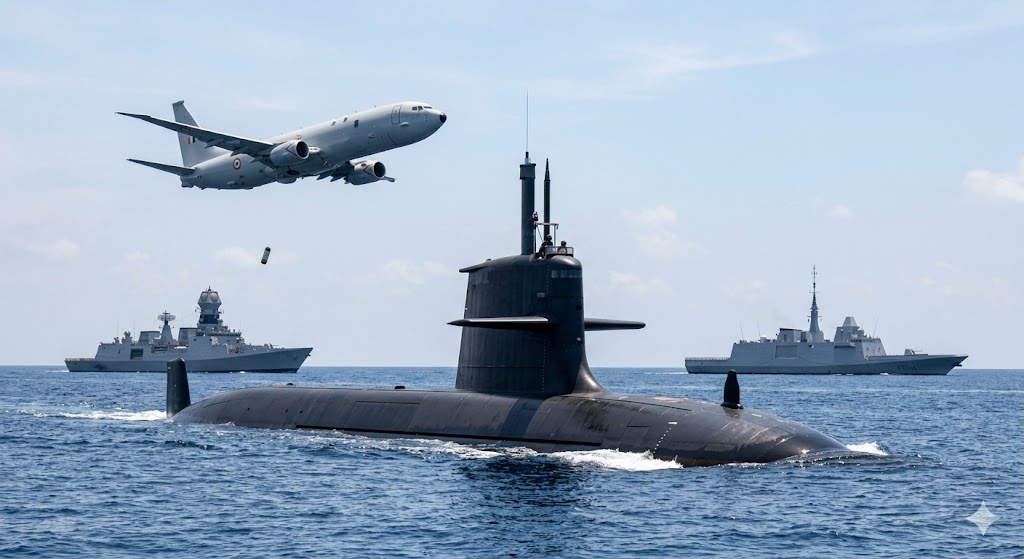
Exercise Varuna 2026: Carrier Power Projection in the Indian Ocean.
Conclusion
Exercise Varuna 2026 represents far more than a routine naval drill; it embodies the depth and resilience of the India-France strategic partnership in an increasingly contested maritime environment. Through rigorous training, technological integration, and shared commitment to maritime security, both navies continue to set high standards for bilateral cooperation.
As the exercise series advances, it will undoubtedly play an instrumental role in shaping a secure and prosperous Indo-Pacific. For defence observers, strategic analysts, and naval professionals, Varuna offers valuable lessons in how trusted partnerships can navigate complex security challenges while fostering innovation and mutual respect.
The strong performance in previous editions and the anticipated success of the 2026 iteration reaffirm that the maritime bonds between India and France remain a cornerstone of regional stability. In the vast expanse of the Indian Ocean, the coordinated efforts of these two navies serve as a beacon of collaborative excellence, ensuring safer seas for generations to come.