World Press Freedom Day: Championing Free Expression
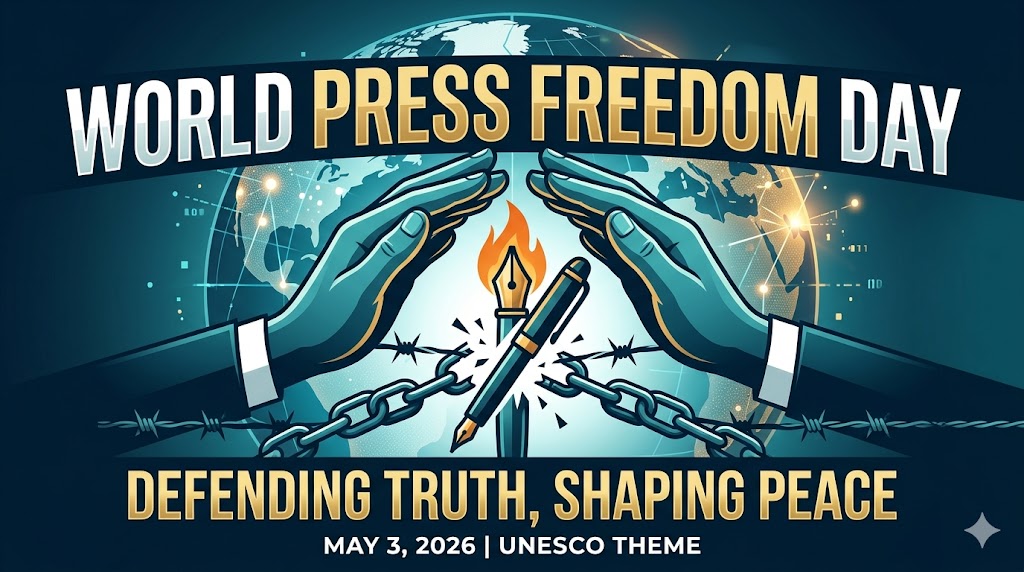
Every year on May 3, the global community observes World Press Freedom Day, a United Nations-recognized occasion dedicated to celebrating the fundamental principles of press freedom, evaluating its state worldwide, defending media independence, and honoring journalists who have lost their lives in pursuit of truth. In 2026, this day arrives at a critical juncture, with the official theme “Shaping a Future at Peace: Promoting Press Freedom for Human Rights, Development, and Security.”
The day serves as both a celebration and a sobering reminder. While independent journalism underpins democratic societies, accountability, and informed public discourse, it faces unprecedented pressures. From physical dangers to legal restrictions and economic vulnerabilities, the environment for media professionals has deteriorated markedly. This article examines the history, significance, current challenges, and future outlook for press freedom, underscoring why protecting it remains essential for a peaceful and just world.
Historical Background of World Press Freedom Day
World Press Freedom Day traces its origins to the early 1990s in Africa. In 1991, African journalists gathered in Windhoek, Namibia, and adopted the Declaration of Windhoek. This landmark document called for a free, independent, and pluralistic press as essential for democracy and development across the continent.
The United Nations General Assembly proclaimed May 3 as World Press Freedom Day in December 1993, following a recommendation from UNESCO’s General Conference. The date marks the anniversary of the Windhoek Declaration, linking the day indelibly to efforts for media pluralism in emerging democracies.
Since its inception, the day has grown into a global platform. UNESCO leads international observances, often hosting major conferences in different regions. Past themes have addressed issues ranging from journalism in digital spaces to media sustainability and safety of reporters. The 2026 conference, held in Lusaka, Zambia, focuses explicitly on the interplay between press freedom, peacebuilding, and human rights.
This historical foundation reminds us that press freedom is not a Western concept but a universal aspiration, rooted in diverse struggles for self-determination and accountability.
The 2026 Theme: Shaping a Future at Peace
The 2026 theme, “Shaping a Future at Peace,” emphasizes journalism’s role in fostering dialogue, preventing conflict, and supporting sustainable development. In an era of geopolitical tensions, disinformation, and technological disruption, free and independent media can act as bridges rather than dividers.
UNESCO highlights how reliable information ecosystems contribute to human rights, security, and recovery from crises. The theme calls for alignment among journalists, technologists, policymakers, and civil society to strengthen media resilience against emerging threats, including artificial intelligence misuse.
At the Lusaka conference on May 4, 2026, participants discuss practical solutions for protecting journalists in conflict zones, countering information manipulation, and ensuring economic viability for independent outlets. This forward-looking approach positions press freedom as indispensable for lasting peace.
The Importance of Press Freedom in Modern Society
Press freedom forms a cornerstone of democratic governance. Article 19 of the Universal Declaration of Human Rights enshrines the right to freedom of opinion and expression, including seeking, receiving, and imparting information through any media. Without a free press, governments lack accountability, corruption flourishes unchecked, and citizens remain uninformed.
Independent journalism exposes abuses of power, amplifies marginalized voices, and facilitates public debate on critical issues such as climate change, public health, and economic inequality. It serves as a watchdog, deterring wrongdoing through scrutiny and fostering transparency.
Economically, vibrant media sectors support informed markets and innovation. Culturally, they preserve diverse narratives and challenge dominant perspectives. In conflict and post-conflict settings, accurate reporting can de-escalate tensions and promote reconciliation.
Yet these benefits face erosion. When press freedom declines, societies risk echo chambers, propaganda dominance, and weakened institutions. World Press Freedom Day underscores that protecting journalists ultimately safeguards everyone’s right to know.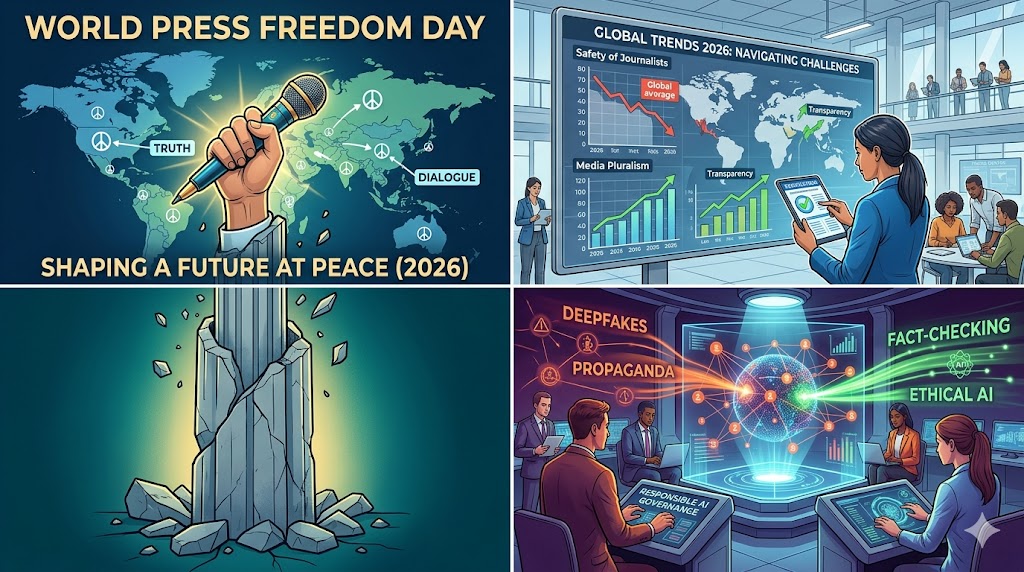
The future of Truth
Current Global State of Press Freedom
The 2026 Reporters Without Borders (RSF) World Press Freedom Index paints a concerning picture. Press freedom has reached its lowest level in 25 years, with the global average score at a record low. For the first time, over half of the world’s countries fall into “difficult” or “very serious” categories.
Declines appear across political, legal, economic, socio-cultural, and safety indicators. The legal framework indicator dropped sharply due to abusive national security laws, strategic lawsuits against public participation (SLAPPs), and judicial harassment. Self-censorship has surged over 60% in many regions amid fear of reprisals.
Only a handful of mostly Nordic countries maintain “good” ratings. Norway tops the index for the tenth consecutive year, while Eritrea ranks last. The United States slipped to 64th position, reflecting ongoing challenges.
UNESCO’s World Trends in Freedom of Expression report similarly notes a historic shift, with declines comparable to major 20th-century crises. Digital platforms, while expanding reach, have also enabled harassment, surveillance, and disinformation campaigns targeting media workers.
Challenges Facing Journalists Worldwide
Journalists encounter multifaceted threats. Physical violence remains the most severe, with record numbers killed in recent years. In 2025 alone, reports documented over 128 journalists and media workers killed, many in conflict zones.
Impunity for these killings persists in many countries, emboldening perpetrators. Online harassment, arbitrary detention, and exile further constrain reporting. Economic pressures—declining advertising revenues, ownership concentration, and state subsidies used as leverage—force self-censorship or closure of independent outlets.
In authoritarian contexts, laws criminalize “fake news” or “national security threats” to silence dissent. Even in democracies, polarized environments and political rhetoric undermine trust in media, sometimes inciting violence against reporters.
Technological shifts introduce new complexities. Artificial intelligence can generate deepfakes that discredit legitimate journalism, while surveillance tools enable monitoring of sources and communications. Gender-based threats disproportionately affect women journalists, compounding inequalities in the field.
Notable Cases and Stories of Courage
Throughout history, brave journalists have risked everything to report the truth. From Anna Politkovskaya’s investigations into Chechen abuses to modern reporters covering conflicts in the Middle East and beyond, their work illuminates hidden realities.
On World Press Freedom Day, tributes honor those who paid the ultimate price. Recent cases in conflict zones highlight the dangers of war reporting, where journalists face targeted strikes and restricted access. International organizations continue advocating for their protection under humanitarian law.
These stories underscore journalism’s human cost and the resilience required to maintain independent voices amid adversity.
Celebrations and Observances Around the World
World Press Freedom Day features diverse events. UNESCO coordinates the global conference, while national governments, media organizations, and NGOs host seminars, awards ceremonies, exhibitions, and awareness campaigns. Over 100 countries typically organize activities.
Common observances include panel discussions on emerging threats, training workshops for digital safety, memorial events for fallen journalists, and public statements reaffirming commitments to media freedom. Social media campaigns with hashtags like #WorldPressFreedomDay amplify messages globally.
Schools and universities incorporate educational programs, helping younger generations appreciate the link between informed citizenship and press independence. Awards recognize outstanding journalism under difficult conditions, inspiring future professionals.
The Role of Technology and AI in Press Freedom
The 2026 focus includes navigating technological change. While digital tools empower citizen journalism and global reach, they also spread misinformation at unprecedented speed. Responsible AI governance becomes crucial to support rather than undermine factual reporting.
Initiatives promoting media literacy, fact-checking collaboration, and ethical AI use in newsrooms offer pathways forward. Strengthening information ecosystems requires balancing innovation with safeguards for journalistic integrity.
Pathways to Strengthening Press Freedom
Addressing the crisis demands concerted action. Governments must repeal repressive laws, ensure swift investigations into attacks on journalists, and promote media pluralism. International cooperation can establish stronger protection mechanisms and combat impunity.
Media organizations need sustainable business models, perhaps through diversified funding and community support. Civil society plays a vital role in advocacy and monitoring. Individuals contribute by supporting independent outlets, demanding transparency, and engaging critically with information sources.
Education remains key—fostering media literacy equips citizens to discern reliable reporting from manipulation.
Conclusion: A Call to Action for Press Freedom
As the world marks World Press Freedom Day in 2026, the message resonates clearly: free, independent, and pluralistic media are indispensable for peace, development, and human rights. The challenges are formidable, but so is the resolve of those dedicated to truth-telling.
By reaffirming commitments under frameworks like the Windhoek Declaration and Article 19, societies can work toward a future where journalism thrives without fear. Protecting press freedom ultimately protects democratic values and human dignity for all.
In the words of global leaders and advocates, let us ensure that truth-tellers remain safe and that information flows freely, shaping a more peaceful and informed world for generations to come.