In the year 2026, weare no longer merely discussing the speculative potential of 'Artificial Intelligence'; we are navigating a reality where it has become the fundamental heartbeat of modern global infrastructure. The transition from "experimental digital tools" to "integrated cognitive partners" has occurred with a speed that has outpaced even the most optimistic forecasts from the previous decade. Today, Artificial Intelligence is not just an application on a smartphone or a feature in a software suite; it is the invisible architecture governing the jobs people pursue, the way we acquire knowledge, the precision of life-saving medical care, and the intricate efficiency of global supply chains.
As technology continues its exponential evolution, the traditional boundary separating the digital and physical worlds is effectively dissolving. We have moved decisively beyond the era of simple chatbots and predictive text. We have entered the age of 'Agentic AI'—autonomous systems capable of sophisticated reasoning, strategic planning, and the execution of complex multi-step tasks without constant human intervention. This technological innovation represents the most significant paradigm shift since the Industrial Revolution. This article provides a comprehensive exploration of how these advancements are reshaping our real world and what the future holds for a society powered by intelligent machines.
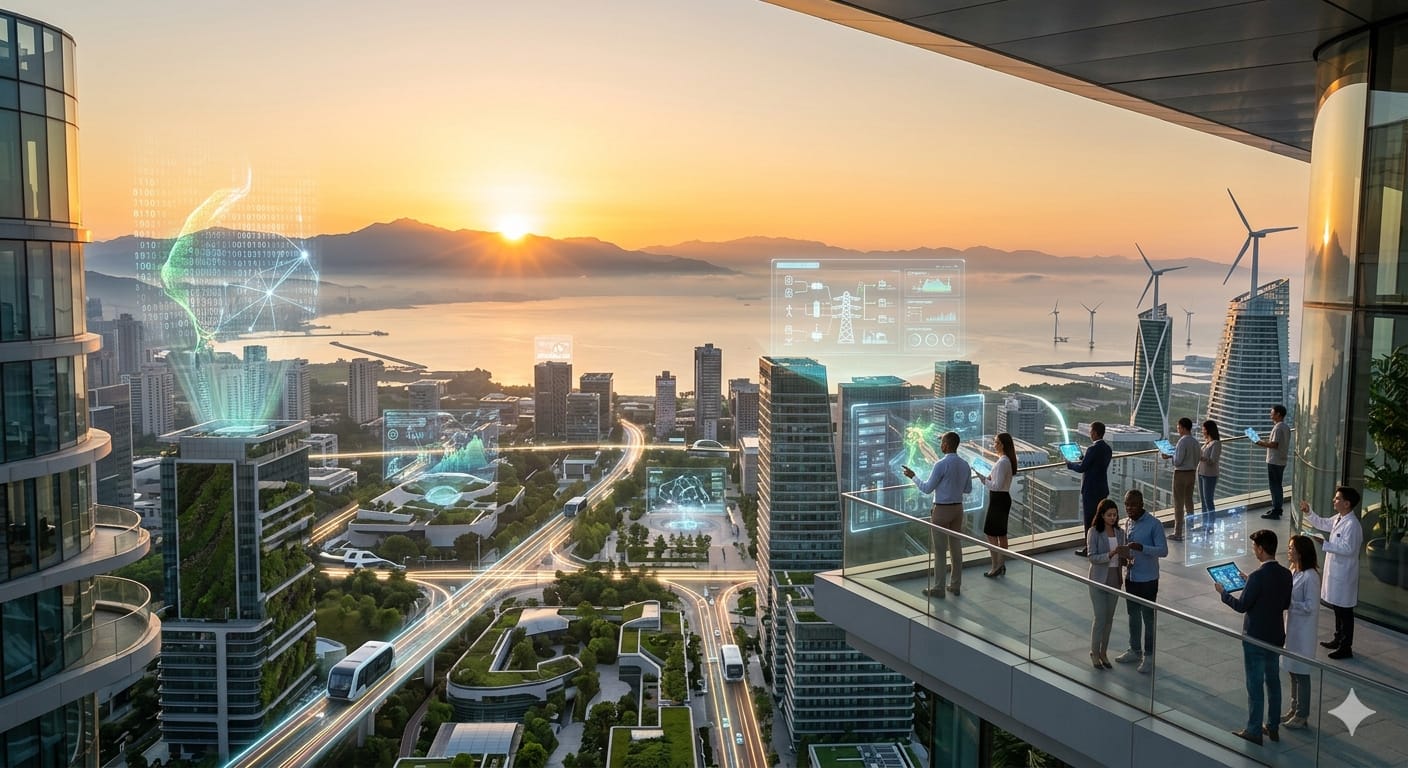
The dawn of the AI integrated Era
1. The Shift to Agentic AI and Autonomous Systems
The most significant technological milestone of the current year is the industry-wide pivot toward "Agency." In the early 2020s, Artificial Intelligence was largely reactive; it required a specific prompt to generate a specific output. Today, Agentic AI understands intent and context.
Autonomous Decision-Makers in the Enterprise
Modern Artificial Intelligence systems can now manage entire business workflows from inception to completion. In a modern corporate environment, an AI agent does not simply "write an email" or "analyze a spreadsheet." Instead, it functions as a digital colleague. For instance, if a project manager sets a goal to "launch a marketing campaign for a new sustainable product," the Agentic AI will research the target demographic, analyze competitor pricing, draft the creative assets, schedule the deployment across social platforms, and provide real-time optimization based on engagement metrics.
This level of automation allows human workers to move away from mundane administrative tasks and focus on high-level strategy and creative direction. The future of work is not about humans competing with machines, but humans orchestrating fleets of intelligent agents.
Physical AI and the Renaissance of Robotics
The integration of Artificial Intelligence with advanced hardware has brought robots out of the sterile, highly controlled environments of research laboratories and onto the messy, unpredictable floors of factories, warehouses, and even homes.
We are witnessing the rise of "General Purpose Robotics." Unlike the specialized robotic arms of the past that could only perform one repetitive motion, today’s humanoid robots are powered by large multimodal models. They can perceive their environment through computer vision, understand verbal commands through natural language processing, and perform unstructured tasks such as sorting irregular objects or assisting in elderly care. This convergence of AI and robotics is solving the global labor shortages in logistics and manufacturing, proving that technology is a vital tool for economic stability.
2. Transforming Healthcare: From Diagnosis to Longevity
The impact of Artificial Intelligence on healthcare is perhaps its most profound contribution to human welfare. In 2026, the medical field has transitioned from reactive treatment to proactive, personalized medicine.
Precision Diagnostics and Early Intervention
AI-powered medical imaging has revolutionized radiology and onology. By training on billions of clinical images, Machine Learning algorithms can now identify early-stage malignancies with a precision rate that exceeds human specialists by nearly 40%. These systems do not replace doctors; rather, they act as an "intelligent second opinion," highlighting anomalies that the human eye might miss.
Beyond imaging, wearable **technology** integrated with **AI** provides continuous health monitoring. These devices can detect heart arrhythmias, early signs of Parkinson’s disease, or fluctuations in glucose levels long before clinical symptoms manifest. This shift toward "preventative Artificial Intelligence' is significantly reducing the burden on hospital systems worldwide.
Accelerated Drug Discovery and Genomic Research
Traditionally, bringing a new drug to market was a decade-long process costing billions of dollars. Today, Artificial Intelligence models are compressing this cycle into months. By simulating molecular interactions at a quantum level, /AI can predict how different chemical compounds will interact with specific proteins in the human body.
In 2026, we are seeing the first batch of drugs entirely designed by Artificial Intelligence entering stage-three clinical trials. Furthermore, the marriage of AI and genomics is allowing for "bespoke therapies." Doctors can now sequence a patient's genome and use *Artificial Intelligence to determine the exact dosage and type of medication that will be most effective for their specific genetic makeup, virtually eliminating the "trial and error" approach to medicine.
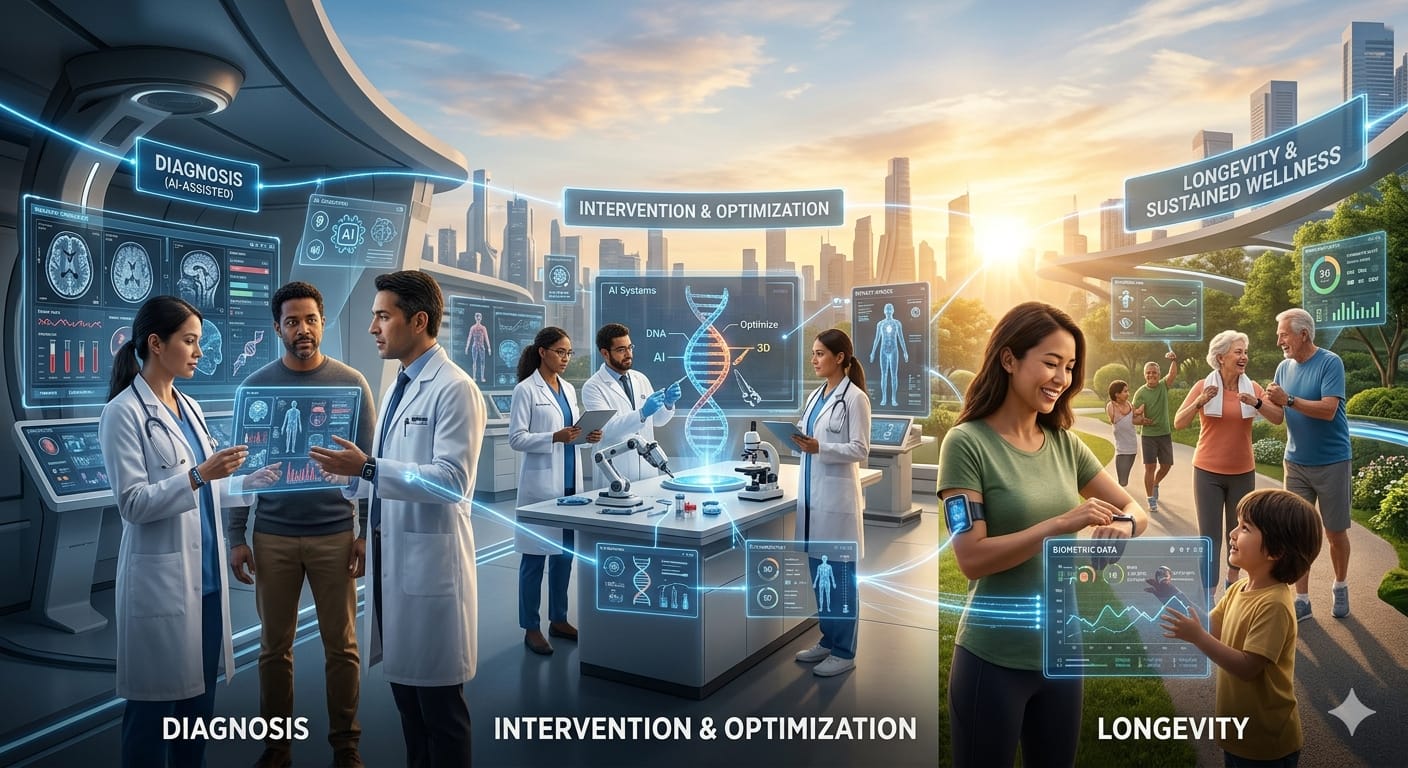
Diagnosis, intervention & optimization and longevity
3. The Revolution in Work and the Global Economy
The global economy is currently navigating a period of **Digital Transformation** so profound that it is being termed "The Intelligence Age." This transformation is not just about efficiency; it is about the fundamental restructuring of how value is created.
Intelligent Operations and Sovereign AI Clouds
As businesses recognize that data is their most valuable asset, the infrastructure supporting that data has changed. We have entered the era of "Sovereign AI," where nations and large corporations are building localized, highly secure cloud environments to process their own **Artificial Intelligence** models. This ensures data privacy and national security while allowing for high-speed, low-latency processing.
This infrastructure supports "Lean Enterprises." In 2026, a startup with five employees can achieve the same output as a 500-person firm from a decade ago by leveraging AI -driven automation for legal, accounting, coding, and customer service functions.
The Rise of the Hybrid Workforce
The narrative of Artificial Intelligence replacing human jobs has evolved into a more nuanced understanding of "Augmentation." While certain routine, manual roles have been automated, a massive new sector of the economy has emerged: AI Orchestration.
The modern worker is now a "System Designer." Their role is to define the objectives, set the ethical guardrails, and manage the output of various Artificial Intelligence systems. This requires a new set of skills—prompt engineering, algorithmic auditing, and human-centric design. The *future* of employment lies in the synergy between human intuition and machine processing power.
4. Education and the Democratization of Knowledge
Education is undergoing a metamorphosis, moving away from the "one-size-fits-all" model that has dominated for over a century. **Artificial Intelligence** is now the primary driver of educational equity and personalized learning.
Adaptive Learning Architectures
In 2026, every student—regardless of their geographical location or socioeconomic status—has access to a world-class, personalized **AI** tutor. These systems are not just repositories of information; they are adaptive pedagogues. By analyzing a student's responses, eye movements, and even frustration levels (detected through facial cues), the **Artificial Intelligence** adjusts the curriculum in real-time. If a student struggles with calculus but excels in visual learning, the **AI** will pivot to teaching the concept through 3D visualizations and interactive simulations.
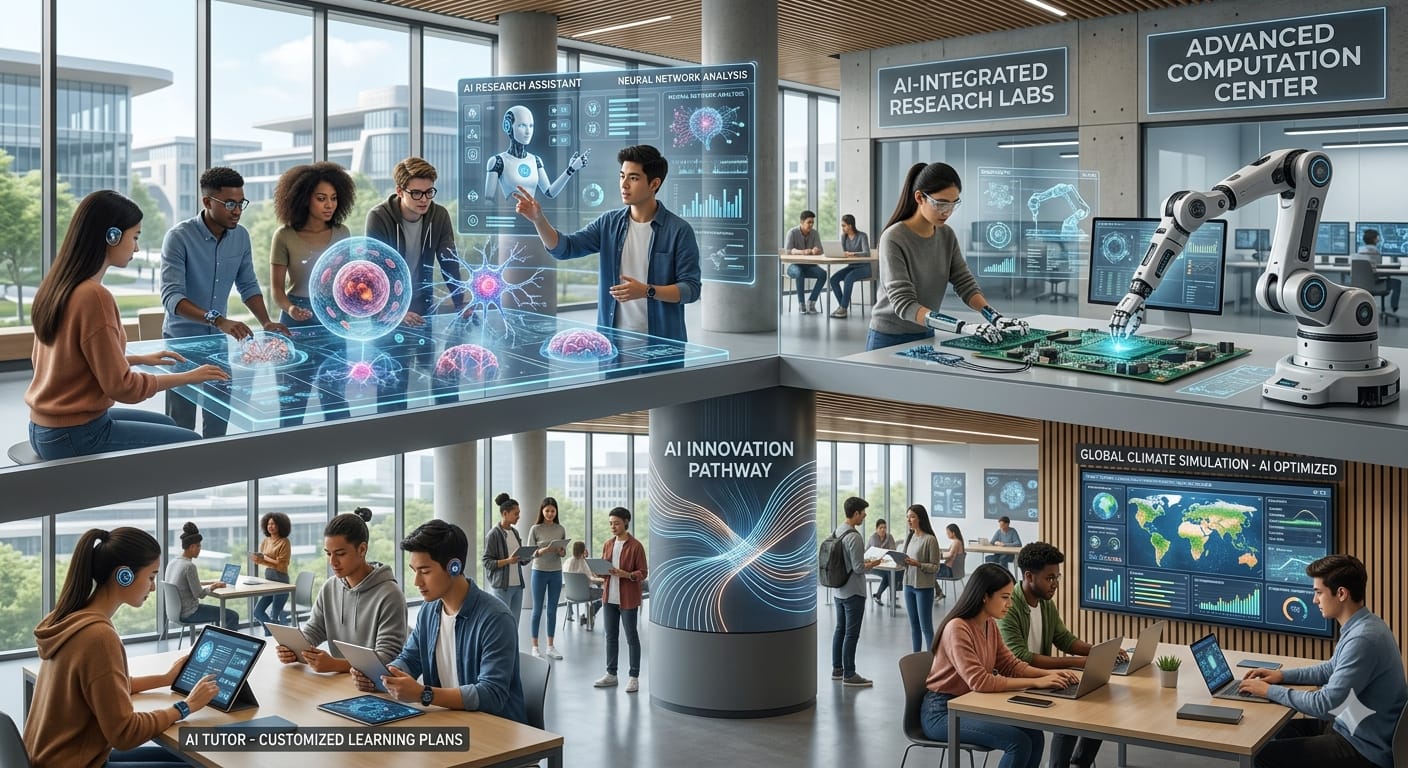
From textbooks to tech-stacks: Witnessing the dawn of personalized, AI-driven education
Inclusive Learning and Global Accessibility
Technological innovation has finally broken the language barrier in education. Real-time, high-fidelity translation allows a student in rural India to participate in a lecture at MIT, asking questions in their native tongue and receiving immediate, accurate responses.
Furthermore, **AI** tools are making education truly inclusive for those with disabilities. Voice-to-tactile interfaces allow visually impaired students to "feel" digital diagrams, while AI-generated sign language avatars provide seamless translation for the deaf. The **real world** impact of this is a global workforce that is more educated, more skilled, and more connected than ever before.
5. Ethical Governance and the "Trust" Economy
As **Artificial Intelligence** systems become more autonomous and integrated into the fabric of society, the focus on ethics, governance, and safety has reached a critical juncture. In 2026, "Trust" has become the most valuable currency in the **technology** sector.
Standardized Global Frameworks
The Wild West era of **AI** development is over. Governments worldwide have established enforceable regulations, such as the matured EU AI Act and similar frameworks in the US and Asia. These laws mandate that high-risk **Artificial Intelligence** applications—those used in criminal justice, hiring, and healthcare—must be transparent, auditable, and free from algorithmic bias.
Explainable AI (XAI) and Algorithmic Auditing
There is a growing demand for "Explainable AI." It is no longer acceptable for an algorithm to be a "black box" that provides an answer without explanation. In sectors like finance, where an **AI** might deny a loan application, or in law, where it might assist in legal research, the system must be able to provide a clear, human-readable rationale for its conclusions. This transparency is essential for maintaining public confidence in **technology**.
Sustainable Computing and "Green AI"
The massive computational power required to train and run large **Artificial Intelligence** models has significant environmental implications. In response, 2026 has seen the rise of "Green AI." Tech giants are investing heavily in neuromorphic computing—chips designed to mimic the energy efficiency of the human brain—and building data centers powered entirely by renewable energy. **Digital Transformation** must be sustainable, or it will ultimately fail. The focus has shifted from "the largest model" to "the most efficient model."
6. Future Outlook: Toward 2030 and Beyond
As we look toward the end of the decade, the trajectory of *Artificial Intelligence'* points toward even more radical changes. We are currently in the "Pre-AGI" (Artificial General Intelligence) phase, where systems are becoming increasingly versatile across multiple domains.
The Convergence of AI and Spatial Computing
The next frontier is the integration of *AI* with Augmented Reality (AR) and Virtual Reality (VR). Within the next few years, our interaction with *technology* will move away from flat screens and into the 3D space around us. *Artificial Intelligence* will act as a "Spatial Assistant," layering digital information over our physical environment. Imagine a mechanic repairing a complex engine while an *AI* overlays 3D instructions directly onto the parts they are touching, or a surgeon performing a procedure with real-time *Ai-guided visual overlays.
Hyper-Personalization and Generative Reality
The concept of static content is dying. In the near future , every digital experience—from the movies we watch to the video games we play—will be generated in real-time by Artificial Intelligence , tailored specifically to our preferences, mood, and past interactions. This "Generative Reality" will allow for a level of immersion and personalization previously only found in science fiction.
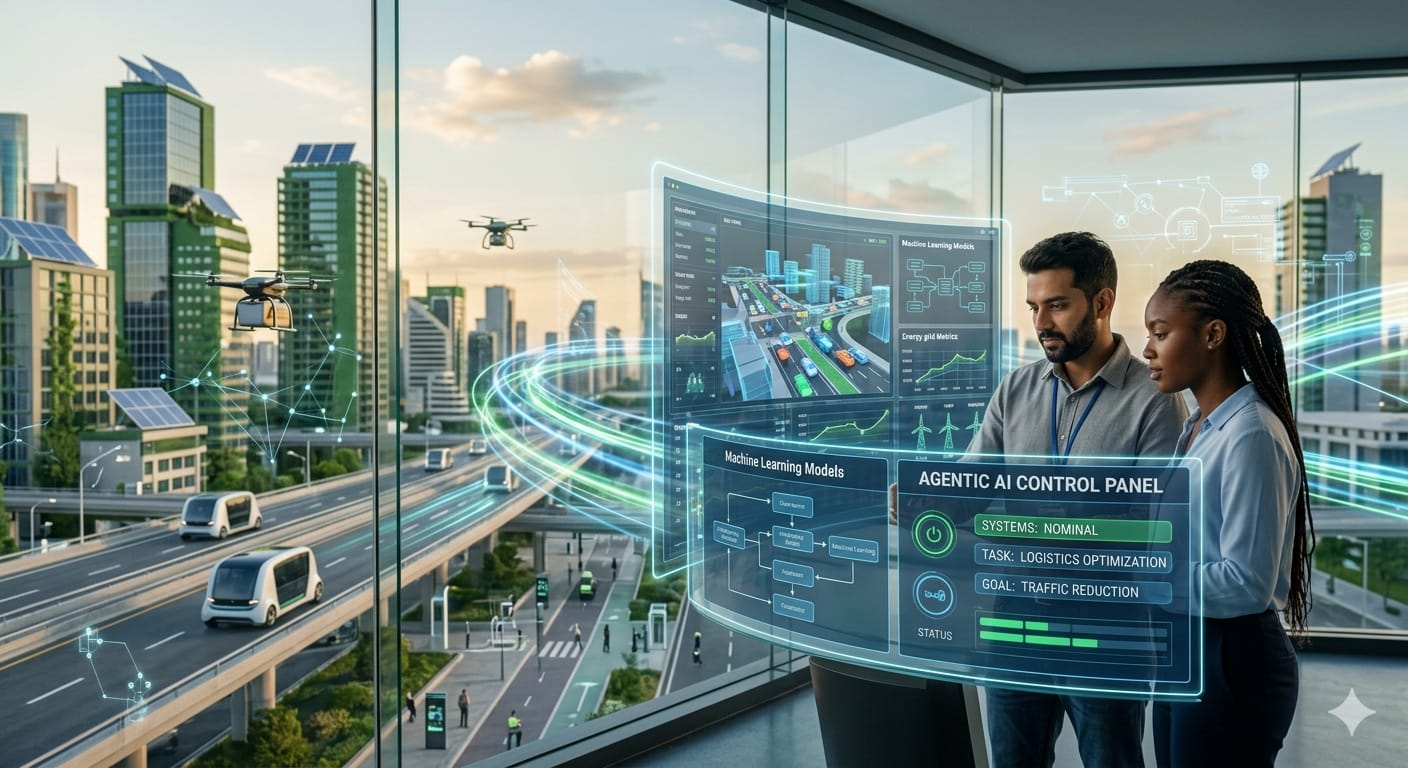
Ai : the ultimate research assistant
Conclusion: Embracing the AI-Enhanced Future
Artificial Intelligence is not merely a passing trend or a simple tool for optimization; it is the defining technology
of our era. It is shaping the real world by amplifying human potential, solving "unsolvable" global challenges like climate change and disease, and creating a more efficient, personalized, and connected global society.
However, the future of this technological innovation depends on our ability to govern it wisely. The goal is not to create a world run by machines, but a world where machines empower humans to be more creative, more productive, and more focused on what truly matters. We are at the beginning of a long journey, and the collaboration between human intelligence and Artificial Intelligence will undoubtedly be the most important partnership in human history.
Frequently Asked Questions
What is the primary significance of 2026: Navigating the Global Impact of the Agentic AI Era?
: The Dawn of the AI -Integrated EraIn the year 2026, weare no longer merely discussing the speculative potential of 'Artificial Intelligence'; we are navigating a reality where it has become the fundamental heartbeat of modern global infrastructure. The transition from "experimental digital tools" to "integrated cognitive partners" has occurred with a speed that has outpaced even the most optimistic forecasts from the previous decade.
How does this development impact Technology?
Today, Artificial Intelligence is not just an application on a smartphone or a feature in a software suite; it is the invisible architecture governing the jobs people pursue, the way we acquire knowledge, the precision of life-saving medical care, and the intricate efficiency of global supply chains.As technology continues its exponential evolution, the traditional boundary separating the digital and physical worlds is effectively dissolving. We have moved decisively beyond the era of simple chatbots and predictive text.
What are the key future projections to monitor?
We have entered the age of 'Agentic AI'—autonomous systems capable of sophisticated reasoning, strategic planning, and the execution of complex multi-step tasks without constant human intervention.