Kuwait Airport Hit by Iranian Drone in Escalating Gulf War
International Affairs• March 28, 2026• Global Edition
Kuwait Airport Drone Attack: A Detailed Analysis
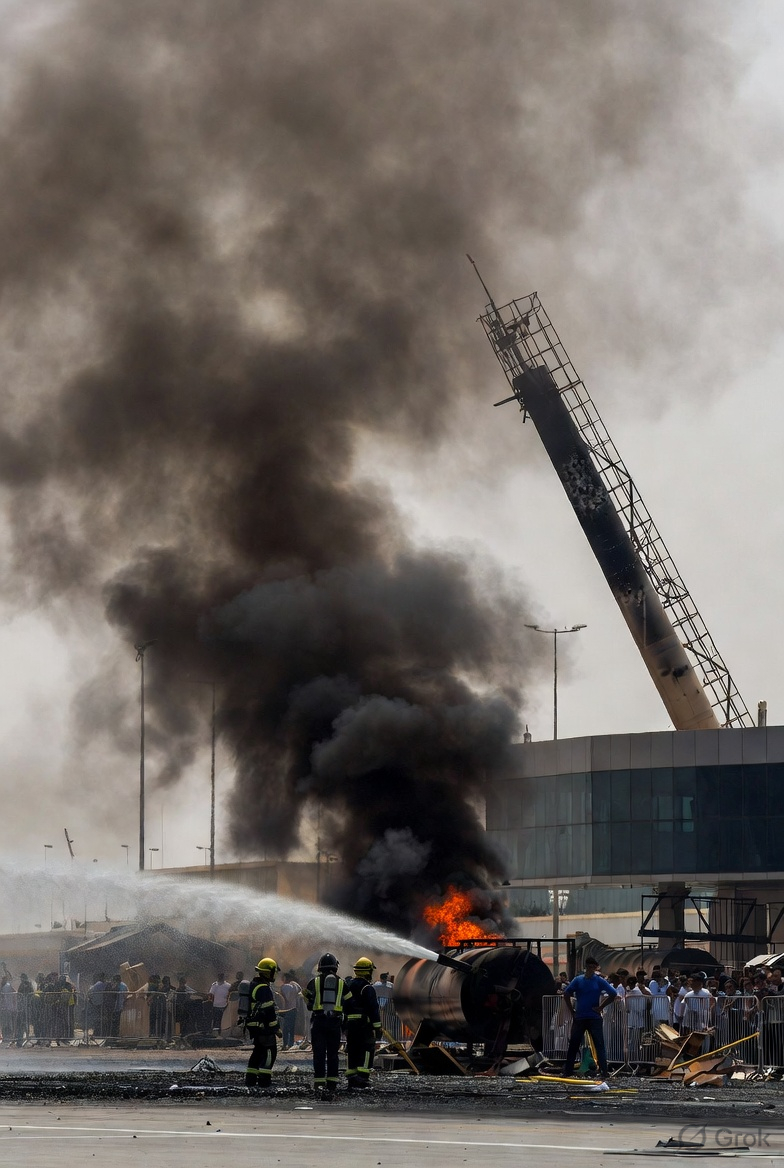
The Kuwait airport drone attack of late March 2026 has sent shockwaves through the Middle East, underscoring the rapid escalation of hostilities between Iran and a coalition of Western and Gulf powers. On March 28, 2026, multiple drones targeted Kuwait International Airport, causing significant damage to its radar system and sparking a fire at a nearby fuel storage facility. Thick black smoke billowed over the airport as emergency teams scrambled to contain the blaze, yet Kuwaiti authorities confirmed no fatalities or serious injuries among passengers or staff. This incident, widely attributed to Iran or its regional proxies, forms part of a broader pattern of retaliatory strikes that began after the United States and Israel launched Operation Epic Fury on February 28, 2026.
Aerial view of chaos at Kuwait International Airport after Iranian drone strike – heavy damage and fires engulf the terminal area"
In the immediate aftermath of the Kuwait airport drone attack, Kuwait’s Public Authority for Civil Aviation reported that the radar infrastructure sustained major structural harm, forcing temporary suspension of flight operations. Incoming and outgoing flights were diverted or delayed, disrupting thousands of travelers and highlighting the vulnerability of critical civilian infrastructure in times of conflict. Similar patterns emerged earlier in the month, with a drone attack airport fuel tank incident on March 25 that also ignited flames but was quickly suppressed. These events echo parallel assaults, including reports of a Dubai airport drone attack that forced flight rerouting and temporary closures at one of the world’s busiest hubs.
To understand the full scope of the Kuwait airport drone attack, it is essential to examine the recent war scenario between Iran and other countries. The 2026 Iran war erupted when US and Israeli forces conducted surprise airstrikes on Iranian nuclear sites, military command centers, and key leadership targets. The operation resulted in the assassination of Supreme Leader Ali Khamenei and several high-ranking officials, marking a dramatic shift from diplomatic negotiations to open warfare. Iran responded swiftly with waves of ballistic missiles and drones aimed at Israeli territory, US military bases across the region, and allied Gulf states perceived as complicit in the offensive. By early March, Iranian strikes had reached Kuwait, the UAE, Bahrain, Saudi Arabia, Oman, and even Jordan, transforming the Persian Gulf into a theater of horizontal escalation.
Iran’s strategy has emphasized asymmetric warfare, leveraging its extensive network of proxies—
including Hezbollah remnants, Iraqi militias, and Houthi forces—to strike at US-allied infrastructure while minimizing direct confrontation with superior American and Israeli air power. The Kuwait airport drone attack fits this playbook: low-cost, high-impact strikes on soft civilian and economic targets designed to impose costs on Gulf monarchies hosting US forces. Kuwait, home to several American bases such as Camp Arifjan and Ali Al Salem Air Base, has been repeatedly targeted alongside energy facilities like the Mina Al-Ahmadi refinery. Reports indicate that 15 hostile drones were detected over Kuwaiti airspace in a 24-hour period surrounding the latest incident, with air defenses intercepting most but allowing at least one to penetrate and strike the airport radar.
This Kuwait airport attack is not isolated. Parallel operations have hit Dubai International Airport, where a drone strike on a fuel depot caused temporary operational halts and flight diversions. In the UAE, Iranian drones have targeted ports, industrial complexes, and data centers, while Oman’s Duqm and Salalah ports suffered damage from similar assaults. Saudi Arabia and Bahrain have also reported interceptions of incoming threats aimed at oil installations and military sites. These actions reflect Iran’s determination to internationalize the conflict, pressuring Gulf states to distance themselves from Washington and Jerusalem while disrupting global energy flows through the Strait of Hormuz. Oil prices have surged past $100 per barrel, with supply disruptions rippling into Asia and Europe.
The impact of the airport attack on local residents has been profound, extending far beyond the immediate physical damage. In Kuwait City and surrounding areas, the Kuwait airport drone attack has triggered widespread anxiety among a population already strained by regional instability. Although no direct casualties occurred at the airport, falling debris from intercepted drones damaged overhead power lines, leading to partial blackouts in residential neighborhoods. Families reported interrupted electricity supply lasting several hours, affecting daily life, medical equipment for vulnerable individuals, and small businesses reliant on consistent power. Local media and social platforms captured scenes of residents stocking up on essentials, with supermarkets experiencing surges in demand for non-perishable goods and emergency kits.
Wide aerial showing Iranian aircraft, missiles, smoke, and oil tankers in the Gulf):
Travel disruptions have compounded the hardship. Thousands of Kuwaiti citizens and expatriate workers—many of whom rely on the airport for family visits, medical treatment abroad, or business travel—found themselves stranded or forced to reroute through alternative hubs in Saudi Arabia or the UAE. Expatriates, who constitute a significant portion of Kuwait’s workforce, expressed frustration over delayed flights and uncertain return schedules, with some reporting financial losses from missed work or canceled contracts. Schools near the airport perimeter were placed on high alert, and parents kept children indoors amid concerns over potential secondary strikes or debris fallout. Kuwaiti authorities issued public advisories urging residents to avoid suspicious objects, report them immediately to emergency services at 112, and refrain from approaching fire sites or damaged areas. Psychological stress has risen noticeably, with local health clinics noting increased inquiries for anxiety support as families navigate the uncertainty of prolonged conflict.
Economically, the Kuwait airport drone attack has ripple effects on a nation heavily dependent on oil exports and aviation connectivity. Airport closures, even temporary, threaten tourism revenue and logistics chains that support the country’s diversification efforts beyond petroleum. Insurance premiums for regional flights have spiked, while shipping companies reroute vessels to avoid heightened maritime risks in the Gulf. For ordinary Kuwaitis, these macro-level pressures translate into higher fuel and import costs, squeezing household budgets already pressured by inflation from global energy volatility.
Turning to the broader geopolitical ramifications, analysts assess the probabilities of this war escalating to a world level with cautious realism. The current trajectory suggests a high likelihood—estimated by regional security experts at approximately 60-75 percent—of further regional escalation within the next six months. This includes intensified proxy engagements across Iraq, Syria, and Yemen, potential direct missile exchanges involving additional Gulf states, and sustained disruption of energy infrastructure. However, the probability of the conflict broadening into a full-scale world war involving major powers such as China, Russia, or NATO allies beyond the current participants stands significantly lower, at around 20-35 percent. Factors tempering global spillover include mutual economic dependencies on Gulf oil, diplomatic backchannels maintained by Oman and Qatar, and the US administration’s stated preference for a limited campaign focused on degrading Iranian capabilities rather than indefinite occupation.
Residential neighborhood with distant smoke, people on street under streetlights):
Several scenarios underpin these assessments. In the most probable near-term outcome (high likelihood, 70 percent), Iran continues a war of attrition through drones and missiles, forcing the US and Israel into a costly, protracted engagement while Gulf states bolster defenses but avoid direct offensive roles. This path risks economic fatigue, with sustained high oil prices triggering recessions in import-dependent economies and political pressure on Western leaders to seek cease-fires. A less likely but dangerous escalation (40 percent probability) could see Iran close the Strait of Hormuz more aggressively or activate sleeper cells for attacks on Western interests worldwide, potentially drawing in European nations or prompting Chinese intervention to secure energy supplies. The lowest-probability worst-case (under 25 percent) envisions direct superpower confrontation if miscalculations lead to strikes on Russian or Chinese assets in the region, though current intelligence assessments indicate all parties are exercising restraint to avoid this threshold.
Experts emphasize that the Kuwait airport drone attack exemplifies Iran’s calculated risk-taking:
targeting symbolic civilian-adjacent sites to signal resolve without crossing into mass-casualty thresholds that might unify global opinion against Tehran. Yet each successive strike raises the stakes, as seen in the cumulative damage to Gulf aviation and energy sectors. International organizations, including the United Nations and the Gulf Cooperation Council, have called for de-escalation, with emergency sessions highlighting humanitarian concerns and the threat to global stability. The UN Human Rights Council has condemned Iranian actions, while Gulf leaders privately urge Washington that merely ending the war is insufficient—Tehran’s proxy networks and missile arsenal must be substantially degraded to prevent future cycles of violence.
From a strategic standpoint, the Kuwait airport drone attack also reveals vulnerabilities in regional air defense architectures. Despite advanced systems supplied by the US and allies, low-flying drones have proven difficult to neutralize entirely, especially when launched in swarms or from dispersed proxy locations. Kuwait has responded by enhancing coordination with US Central Command, increasing patrols, and investing in counter-drone technologies. Similar upgrades are underway across the Gulf, yet the frequency of incidents suggests that deterrence remains incomplete.
Iranian drones swarm Kuwait International Airport as thick black smoke rises from burning fuel tanks – March 2026"
Longer-term implications for local residents extend to reconstruction and resilience-building. Kuwaiti officials have pledged rapid repairs to the airport radar, with international aviation partners offering technical assistance. However, repeated threats could deter foreign investment and tourism, slowing the nation’s post-pandemic economic recovery. Community leaders have organized support networks, distributing information on emergency preparedness and mental health resources to mitigate the psychological toll of living under the shadow of the Kuwait airport drone attack and its sister incidents.
In conclusion, the Kuwait airport drone attack represents more than a tactical strike; it embodies the dangerous spillover of the 2026 Iran war into civilian domains across the Gulf. As Iran presses its retaliatory campaign against perceived enablers of US-Israeli operations, the human and economic costs mount for ordinary residents in Kuwait and neighboring states. While probabilities favor contained regional conflict over global catastrophe, the margin for error narrows with each drone launched. Diplomatic ingenuity, combined with robust defensive measures, will be essential to prevent further incidents like the Kuwait airport drone attack from igniting a wider conflagration. The world watches closely, hoping that restraint and negotiation can yet prevail over the logic of escalation in this volatile theater..
Frequently Asked Questions
What is the primary significance of Kuwait Airport Hit by Iranian Drone in Escalating Gulf War?
Kuwait Airport Drone Attack: A Detailed AnalysisThe Kuwait airport drone attack of late March 2026 has sent shockwaves through the Middle East, underscoring the rapid escalation of hostilities between Iran and a coalition of Western and Gulf powers. On March 28, 2026, multiple drones targeted Kuwait International Airport, causing significant damage to its radar system and sparking a fire at a nearby fuel storage facility.
How does this development impact International Affairs?
Thick black smoke billowed over the airport as emergency teams scrambled to contain the blaze, yet Kuwaiti authorities confirmed no fatalities or serious injuries among passengers or staff. This incident, widely attributed to Iran or its regional proxies, forms part of a broader pattern of retaliatory strikes that began after the United States and Israel launched Operation Epic Fury on February 28, 2026.
What are the key future projections to monitor?
Aerial view of chaos at Kuwait International Airport after Iranian drone strike – heavy damage and fires engulf the terminal area"In the immediate aftermath of the Kuwait airport drone attack, Kuwait’s Public Authority for Civil Aviation reported that the radar infrastructure sustained major structural harm, forcing temporary suspension of flight operations.
.jpg)
.jpg)
.jpg)
.jpg)