"8th Pay Commission: 2026 Salary Hike & Benefits"
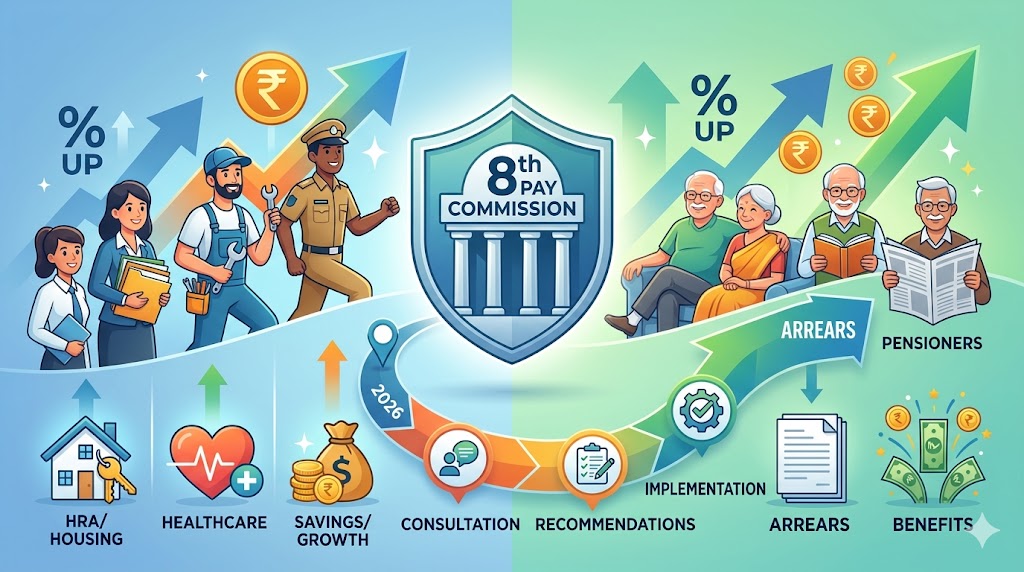
In an era where India is rapidly advancing as one of the world's fastest-growing major economies, the 8th pay commission emerges as a landmark initiative designed to modernize compensation for central government employees. Announced amid ambitious national goals, this commission promises not just incremental adjustments but a comprehensive overhaul of pay structures, allowances, and pensions. For the millions of dedicated public servants who form the backbone of governance, the 8th pay commission represents a timely recognition of their contributions.
As of April 2026, the 8th pay commission remains in its active consultation phase, with stakeholders across the country providing inputs. This article delves deep into what the 8th pay commission entails, its expected salary hike, benefits especially for lower-level employees, and its broader significance in India's journey toward economic prominence. Whether you are a government employee tracking the 8th pay commission latest updates, a pensioner awaiting arrears, or a student considering a public sector career, this guide offers clear, actionable insights.
What is the 8th Pay Commission?
The 8th pay commission, formally known as the Eighth Central Pay Commission, is an independent body constituted by the Government of India to review and recommend revisions in the salaries, allowances, pensions, and service conditions of central government employees and pensioners. Established every decade following the conclusion of the previous commission's tenure, it ensures that compensation keeps pace with inflation, economic changes, and evolving work demands.
Unlike ad-hoc revisions, the 8th pay commission follows a structured approach. It examines factors such as the cost of living, fiscal sustainability, productivity in public services, and the need to attract top talent. The commission's recommendations typically lead to a new pay matrix, updated fitment factors, and revised dearness allowance (DA) mechanisms. Once approved by the Cabinet, these changes apply retrospectively, often resulting in substantial arrears for employees.
At its core, the 8th pay commission is more than a bureaucratic exercise—it is a policy tool to strengthen the administrative machinery that drives national development. With over 50 lakh central government employees and nearly 68 lakh pensioners in its ambit (totaling around one crore beneficiaries when including families and state-level adoptions), its impact ripples across the economy.
Historical Evolution of Pay Commissions in India
To appreciate the significance of the 8th pay commission 2026, it helps to look back at its predecessors. India's first pay commission was set up in 1947, shortly after independence, to standardize salaries in the nascent republic. Subsequent commissions—second through seventh—progressively refined the system.
The 7th Pay Commission, implemented from January 1, 2016, introduced a fitment factor of 2.57 and replaced the earlier grade-pay structure with a more transparent pay matrix. It delivered an average salary hike of around 14-23% after accounting for existing DA. Minimum basic pay rose to Rs 18,000, while the highest levels saw proportional increases.
Each commission has progressively raised the minimum pay and compressed the pay scale ratio to reduce disparities. The 8th pay commission builds on this legacy but operates in a vastly different economic context. With inflation trends, rising living costs, and India's GDP ambitions, expectations are higher. Employee unions have submitted detailed memorandums highlighting the need for a fitment factor between 3.0 and 3.83, which could translate into a 30-34% effective salary hike or more, depending on final approvals.
Past implementations have shown that while headline hikes appear generous, the real benefit comes from merging DA into the new basic pay, resetting the allowance cycle, and providing long-term pension security.
Current Status and Timeline of the 8th Pay Commission
As of April 2026, the 8th pay commission is fully operational following its formal constitution on November 3, 2025. Headed by Justice Ranjana Prakash Desai, a retired Supreme Court judge, the panel has been given 18 months to submit its recommendations—targeting around May 2027.
The 8th Pay Commission aims to provide a substantial lift to entry-level and Group C/D employees, enhancing financial security for millions of public servants.
Key milestones include:
Consultation Phase: Ongoing regional visits and stakeholder meetings. Recent schedules include interactions in Dehradun (April 24, 2026), Delhi (April 28-29, 2026), and Pune (May 4-5, 2026).
Feedback Mechanism: An 18-point questionnaire was hosted on MyGov, with the deadline extended to March 31, 2026. Memorandums from unions, associations, and individuals can still be submitted until April 30, 2026, via the official portal.
Effective Date: Recommendations are widely expected to take effect from January 1, 2026—the day after the 7th Pay Commission's term ended. Any delay in notification will attract arrears from this date.
The government has emphasized fiscal prudence while assuring timely implementation. No major announcements appeared in the 2026 Union Budget, but the process remains on track. This 8th pay commission latest status reassures employees that the exercise is progressing transparently.
Expected Salary Hike, Fitment Factor, and Pay Structure
One of the most anticipated aspects of the 8th pay commission salary hike is the fitment factor—the multiplier applied to the current basic pay to arrive at the revised figure. Employee bodies like the National Council-JCM have demanded a factor of 3.83, pushing the minimum basic pay from Rs 18,000 to Rs 69,000. Other proposals include raising the annual increment from 3% to 6% and tripling various allowances.
Independent analysts project a more moderate but still substantial 30-34% average increase across levels. For a typical Group C employee earning Rs 25,000 basic pay today (plus 58% DA), the new structure could add several thousand rupees monthly once implemented. Higher fitment would amplify this for entry-level roles.
The new pay matrix will likely retain the 18-level structure of the 7th CPC but with upward revisions. DA, currently at 58% and expected to rise further in April 2026, will be merged into the basic pay and reset to zero under the 8th pay commission. Future DA hikes will then be calculated on the enhanced base, leading to compounding benefits over time.
Arrears calculations will cover the period from January 1, 2026, until actual implementation—potentially a one-time windfall of several months' salary for many.
How the 8th Pay Commission is a Boon for Lower-Level and Small-Job Employees
The 8th pay commission is particularly fruitful for employees in lower pay scales—often referred to as “small jobs”—who form the largest segment of the workforce. Group C and D cadres, including clerical staff, technicians, and support personnel, stand to gain the most in relative terms.
A higher minimum pay directly lifts the floor for the lowest earners, improving their take-home pay, housing allowances (HRA), and transport benefits. For someone previously struggling with inflation-eroded salaries, this represents a meaningful upgrade in quality of life—better healthcare access, education for children, and financial security.
Moreover, the 8th pay commission salary hike narrows the gap between entry-level and senior positions through pay-matrix compression. Annual increments and promotion benefits become more rewarding. Pensioners in lower brackets also receive proportional uplifts, ensuring dignity in retirement.
In practical terms, consider a postal assistant or railway technician earning around Rs 20,000-25,000 basic today. Post-revision, their effective compensation could rise by 30% or more, translating into an additional Rs 8,000-12,000 monthly. This is not mere statistics—it is a tangible boost that motivates performance and reduces attrition in essential public services.
Key Advantages of the 8th Pay Commission
The advantages of the 8th pay commission extend far beyond individual paychecks. First, it aligns compensation with economic realities, neutralizing inflation through DA merger and fresh calculations. Second, it enhances employee morale and productivity, leading to more efficient governance.
Third, the 8th pay commission benefits act as an economic stimulus. Higher disposable incomes among one crore beneficiaries increase consumption, support local businesses, and contribute to GDP growth. Fourth, improved pensions provide long-term social security, reducing fiscal burdens on future generations.
Health and wellness allowances may also see upward revisions, promoting better work-life balance. Overall, the commission fosters a motivated, skilled bureaucracy capable of delivering on national priorities like digital India and infrastructure development.
The 8th Pay Commission’s Role in India’s Economic Ascendancy
India’s emergence as the world’s fourth-largest economy by nominal GDP (projected at approximately $4.15-4.3 trillion in 2026) underscores the strategic importance of the 8th pay commission. With consistent 6-7% growth, the nation is on track to become a global powerhouse. A robust, well-compensated government workforce is essential to sustain this trajectory.
Competitive salaries prevent talent drain to the private sector, ensuring that critical departments—from revenue to infrastructure—retain experienced professionals. The 8th pay commission signals the government’s commitment to merit-based public service, aligning workforce incentives with Viksit Bharat goals. By enhancing purchasing power, it also fuels domestic demand, a key driver of India’s growth story.
In essence, the 8th pay commission is not an expense but an investment in human capital that accelerates India’s rise as an economic leader.
Guidelines for Government Workers and Encouragement for Students
The 8th pay commission provides clear guidelines for government workers by standardizing pay, promotions, and retirement benefits. It emphasizes performance-linked increments, transparent pay matrices, and updated service rules that reward efficiency and integrity.
For students and young aspirants, the 8th pay commission makes government jobs more attractive than ever. Lucrative starting salaries, job security, comprehensive medical facilities, and handsome pensions contrast sharply with the uncertainties of private-sector employment. UPSC aspirants, SSC candidates, and those eyeing railway or banking roles now see a brighter financial future.
This encouragement is vital for building a youthful, dynamic bureaucracy. As India’s economy expands, the demand for skilled administrators grows. The 8th pay commission ensures that public service remains a prestigious and rewarding career choice, inspiring millions of students to prepare for competitive examinations.
Government’s Vision and Decisions for Upcoming Years
The decision to constitute the 8th pay commission reflects forward-thinking governance. By initiating the process well in advance and setting a clear 18-month timeline, the government demonstrates its resolve to support employees while maintaining fiscal discipline. Future plans likely include periodic reviews and integration with broader reforms such as pension rationalization and digital payroll systems.
States are expected to follow suit with their own pay revisions, amplifying the nationwide impact. The 8th pay commission thus serves as a blueprint for the coming decade, ensuring that public service evolves in tandem with India’s economic ambitions.
Potential Challenges and the Road Ahead
While the outlook is promising, challenges remain. The fiscal implications of a large salary hike must be balanced against other developmental expenditures. Implementation delays could test employee patience, though arrears provisions mitigate this. The commission must also address regional disparities and the needs of specialized cadres.
Nevertheless, the consultative approach—inviting inputs from diverse stakeholders—instills confidence that the final recommendations will be balanced and equitable.
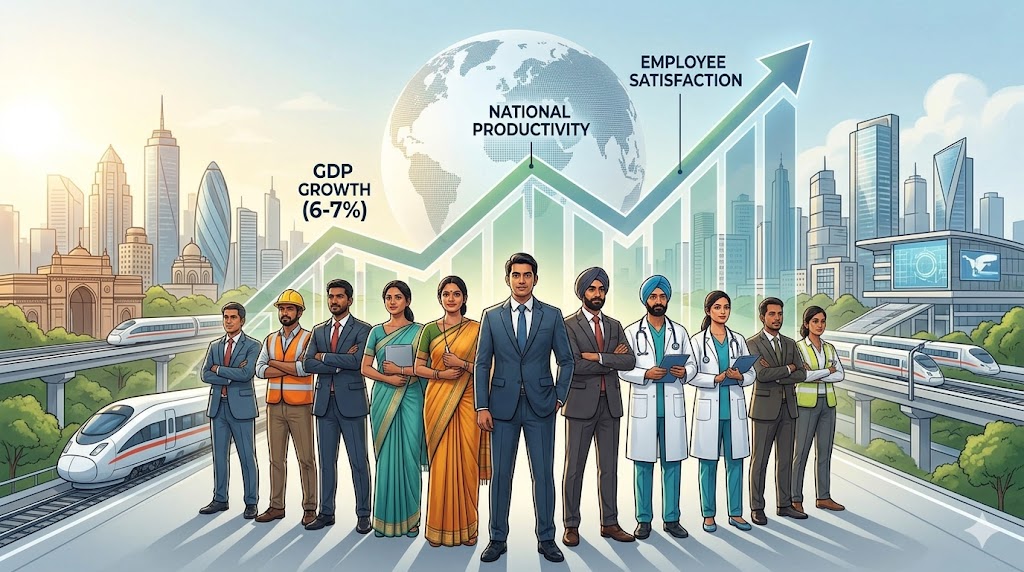
By aligning pay with economic realities, the 8th Pay Commission strengthens the administrative machinery necessary to sustain India's trajectory as a leading global economy.
Conclusion: A Fruitful Step Toward a Stronger India
The 8th pay commission stands as a beacon of progress, offering a salary hike that is both fruitful and transformative. From boosting lower-level employees to reinforcing national economic goals, its advantages are profound and far-reaching. As India marches toward greater prosperity, this commission reaffirms the government’s commitment to its workforce—the very foundation of good governance.
Employees and pensioners can look forward to enhanced financial security, while students gain renewed motivation to serve the nation. The 8th pay commission 2026 is more than an update; it is a strategic enabler for India’s bright future. Stay tuned to official portals for the 8th pay commission latest developments, and prepare for a new chapter in public service excellence.