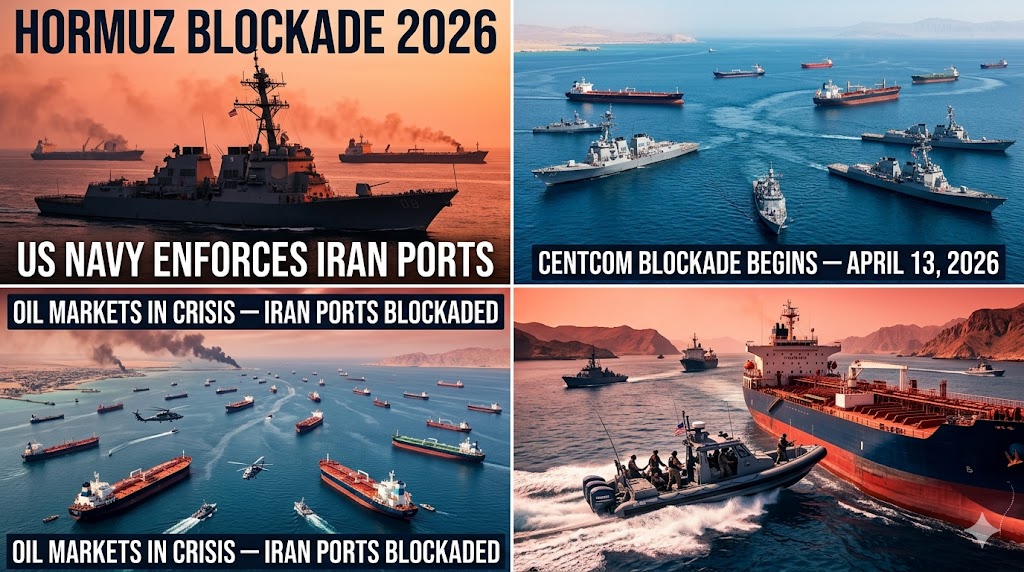
In a dramatic escalation that has sent shockwaves through global energy markets and diplomatic circles, the United States has initiated a full naval blockade of all Iranian ports effective Monday, April 13, 2026. U.S. Central Command (CENTCOM) confirmed the operation would commence at 10 a.m. ET, targeting every vessel entering or exiting Iranian coastal areas in the Strait of Hormuz. This move, personally directed by President Donald Trump following the collapse of high-stakes ceasefire negotiations in Pakistan, marks a bold assertion of American power in one of the world’s most volatile regions.
The strait of hormuz blockade is not merely a tactical maneuver; it represents Trump’s uncompromising stance against what he describes as Iranian extortion, nuclear ambitions, and the flow of weapons to proxy groups. As oil prices surge and shipping traffic grinds to a halt, the world watches closely. This article provides a comprehensive, fact-based analysis of the current situation, drawing on the latest developments, historical context, human impacts, and international reactions. We examine how the trump hormuz blockade fits into the broader 2026 Iran war, the human cost in Lebanon and beyond, and the strategic calculus driving U.S. policy.
Background: From Ceasefire Collapse to Naval Blockade
The roots of today’s strait of hormuz blockade trace back to late February 2026, when U.S. and Israeli strikes targeted Iranian military and nuclear facilities, igniting a wider conflict. A fragile two-week ceasefire was brokered in early April, mediated by Pakistan, with Iran agreeing to reopen the Strait of Hormuz to international shipping. However, Tehran’s insistence on charging exorbitant tolls—reportedly up to $2 million per vessel, sometimes demanded in cryptocurrency—quickly undermined the truce.
Iran had effectively restricted passage, laying mines in some areas and demanding fees that Western leaders, including Trump, labeled as outright extortion. Peace talks in Islamabad, involving Vice President JD Vance and Iranian negotiators, ended without agreement late Sunday. Iran refused to abandon its nuclear program or halt arms shipments to allies in Yemen, Lebanon, and Gaza.
In response, President Trump took to Truth Social, declaring: “Effective immediately, the United States Navy, the Finest in the World, will begin the process of BLOCKADING any and all Ships trying to enter, or leave, the Strait of Hormuz.” CENTCOM followed with a precise statement: forces would enforce the blockade impartially against all nations’ vessels bound for Iranian ports, while preserving freedom of navigation for non-Iranian traffic. This us navy blockade hormuz is explicitly designed to choke off Iran’s export and import lifelines until Tehran complies with core demands—no nuclear weapons development and an end to proxy warfare.
Trump’s Unyielding Position: No Cooling Down on Iran Threats
President Trump has shown no signs of de-escalation, a point repeatedly highlighted in his public statements. “Iran is unwilling to give up its nuclear ambitions,” he posted, linking the trump naval blockade iran directly to the failure of diplomacy. His administration views the blockade as essential leverage: without it, Iran could continue funneling weapons to Hezbollah in Lebanon, the Houthis in Yemen, and other groups destabilizing the region.
This firm approach aligns with Trump’s long-standing “maximum pressure” doctrine. Analysts note that the president sees the current moment as a window to force concessions that previous administrations could not secure. By blockading iranian ports, the U.S. aims to prevent not only oil exports but also the import of components that could advance Tehran’s nuclear program. Trump has repeatedly warned that failure to agree to verifiable denuclearization terms will result in sustained economic isolation.
Critics argue the strategy risks broader war, yet supporters praise it as necessary realism. As one senior U.S. official told reporters, the blockade enforces international norms against maritime tolls while addressing the arms threat head-on. Trump’s message is clear: there is no off-ramp until Iran meets the terms.
Iran’s Response: Refusals, Tolls, and Retaliation Warnings
Tehran has reacted defiantly to the centcom iranian ports blockade. Iranian officials have vowed to retaliate against any U.S. naval vessels in the strait and warned that the move violates the recent ceasefire. For weeks leading up to the announcement, Iran refused safe passage for refinery and LPG ships without payment of tolls, effectively turning the Strait of Hormuz into a pay-to-pass chokepoint.
This refusal exacerbated global energy disruptions. Shipping data showed vessels making U-turns after Trump’s announcement, with traffic in the strait—responsible for roughly 20% of the world’s daily oil supply—halting almost entirely. Iranian state media framed the us blockade strait of hormuz as an act of aggression, while promising to defend its territorial waters.
US Navy port blockade
Human Cost: Devastation in Lebanon and Ripple Effects on Palestine
While the naval focus remains on the Persian Gulf, the interconnected nature of the 2026 conflicts has exacted a heavy human toll elsewhere. Israel has continued intensive operations against Hezbollah in Lebanon, explicitly stating that the U.S.-Iran ceasefire does not apply there. On April 8, Israeli airstrikes killed more than 350 people in a single day across Lebanon—the deadliest 24-hour period since the fighting intensified.
Families in Beirut, southern Lebanon, and the Bekaa Valley describe scenes of unimaginable grief. Mothers searching through rubble for children, entire neighborhoods reduced to dust. Reports detail hundreds of civilians among the casualties, with hospitals overwhelmed. One Lebanese official called it “a killing machine that must be stopped.”
The pain extends to Palestinian communities. Though the Gaza front has seen relative quiet amid broader talks, the regional war has deepened despair. Families in Gaza and the West Bank speak of losing loved ones—fathers, brothers, young girls caught in crossfire or airstrikes tied to the wider Iran-backed resistance. “We meet our loved ones only in memories now,” one Palestinian mother told international media, her voice breaking as she recalled daughters killed in recent escalations. The blockade and ongoing strikes have only heightened fears of famine and isolation, with aid routes strained by the chaos.
These stories underscore the human dimension often lost in strategic discussions. Over 2,000 Iranian deaths from earlier U.S.-Israeli strikes have been reported, while Lebanon alone has seen thousands affected since March. The strait of hormuz news 2026 carries real-world consequences far beyond oil tankers.
International Reactions: Allies, Oil Markets, and Geopolitical Shifts
Reactions to the trump hormuz blockade have been swift and varied. Gulf states, heavily reliant on the strait, express private concern over supply disruptions even as they publicly support curbing Iranian influence. Saudi Arabia and the UAE have quietly increased production to offset potential shortfalls.
European and Asian allies are monitoring oil price spikes, which rose sharply on Sunday. The United Kingdom has firmly rejected Iran’s toll demands, with Foreign Secretary Yvette Cooper stating that such fees violate international maritime law. Australia has echoed calls for freedom of navigation but has not committed naval assets to the blockade effort. While no outright “backing out” has occurred, some NATO partners urge restraint to avoid wider escalation.
China and Russia have criticized the move as provocative, with Beijing warning of energy market instability. Yet the U.S. maintains the operation is limited and impartial.
Strategic Implications: Nuclear Deterrence and Arms Control
At its core, the us navy controls ships hormuz operation aims to dismantle Iran’s ability to export oil and import dual-use materials. Trump has made clear: if Iran cannot agree to verifiable terms ending its nuclear weapons program, the blockade will persist, crippling its economy. This also targets the arms thread—Iran’s supply of missiles and drones to proxies fueling conflicts in Lebanon, Gaza, and Yemen.
Naval blockade explained in simple terms: U.S. warships will intercept and turn back vessels headed to or from Iranian ports, while allowing innocent passage through the strait itself. CENTCOM has emphasized de-mining efforts and protection of commercial shipping not involved with Iran.
Economic and Global Ramifications
The blockade’s timing could not be more consequential. Global oil prices have already climbed over 30% since the war began. Analysts predict further spikes unless alternative routes or increased OPEC+ output materialize. Insurance rates for tankers have skyrocketed, and supply chains for everything from plastics to fertilizers face disruption.
Longer-term, success could reshape Middle East security architecture, weakening Iran’s regional leverage. Failure risks miscalculation, with Iran threatening asymmetric responses.
Looking Ahead: Paths to De-escalation or Wider War
As CENTCOM forces implement the blockade on this Monday morning, the coming hours and days will be critical. Will Iran return to the negotiating table with concessions on nuclear issues and arms shipments? Or will retaliation widen the conflict?
President Trump’s strategy leaves little room for ambiguity. The world is witnessing a high-stakes test of resolve in the strait of hormuz blockade 2026. For families in Lebanon mourning their dead, Palestinians grieving lost daughters and sons, and global leaders balancing energy security with peace, the stakes could not be higher.
This situation remains fluid. The U.S. Navy’s presence in the Hormuz strait serves as both deterrent and enforcer, underscoring America’s commitment to stability on its terms. As events unfold, one truth is evident: the trump naval blockade iran has irrevocably altered the trajectory of the 2026 Middle East war.
Frequently Asked Questions
What is the primary significance of US Navy Blockade Iranian Ports: Strait of Hormuz Crisis 2026?
A Defining Moment in the 2026 Middle East ConflictIn a dramatic escalation that has sent shockwaves through global energy markets and diplomatic circles, the United States has initiated a full naval blockade of all Iranian ports effective Monday, April 13, 2026. U.S.
How does this development impact International Affairs?
Central Command (CENTCOM) confirmed the operation would commence at 10 a.m. ET, targeting every vessel entering or exiting Iranian coastal areas in the Strait of Hormuz.
What are the key future projections to monitor?
This move, personally directed by President Donald Trump following the collapse of high-stakes ceasefire negotiations in Pakistan, marks a bold assertion of American power in one of the world’s most volatile regions.The strait of hormuz blockade is not merely a tactical maneuver; it represents Trump’s uncompromising stance against what he describes as Iranian extortion, nuclear ambitions, and the flow of weapons to proxy groups.