International Affairs• April 12, 2026• Global Edition
A Flashpoint Ignites Again
The geopolitical landscape between the United States and Iran has reached a dangerous new inflection point in April 2026. What began as a fragile two-week ceasefire following weeks of intense conflict has crumbled into open confrontation over the Iran Strait of Hormuz. President Donald Trump’s announcement of a full US Navy blockade—coupled with 50% tariffs on nations supplying weapons to Tehran—signals a hardline shift after marathon talks in Islamabad collapsed without agreement.
At the heart of the impasse lies control of the Iran Strait of Hormuz, the narrow waterway through which one-fifth of global oil and gas flows. Iran’s insistence on imposing tolls for safe passage—reports cite fees as high as $1 per barrel in cryptocurrency or millions per vessel—has been dismissed by Washington as “world extortion.” Trump and Vice President JD Vance have made clear: if the toll issue cannot be managed on US terms, no ships will cross the Iran Strait of Hormuz under American watch. This latest escalation in US-Iran tensions echoes decades of mistrust but carries fresh urgency amid ongoing Iran-Israel fighting and Tehran’s unresolved nuclear ambitions.
The current crisis traces back to early 2026, when US and Israeli strikes targeted Iranian military and nuclear infrastructure during what some have called the Twelve-Day War. A temporary ceasefire was brokered in early April, conditional on Iran reopening the Iran Strait of Hormuz for unrestricted international shipping. Tehran initially agreed but quickly introduced conditions: limited daily transits (as few as 15 vessels), mandatory coordination with Iranian forces, and toll payments for “safe passage.”
High-level diplomacy followed. France and Italy engaged Iran on securing safe Hormuz passage, while earlier indirect talks occurred in Oman and Rome. The decisive round shifted to Islamabad, Pakistan, on April 11. Vice President JD Vance led the US delegation in direct face-to-face negotiations with Iranian officials—the highest-level US-Iran talks since 1979. After 21 grueling hours, Vance emerged to declare no agreement had been reached. Iran rejected the US “final and best offer,” particularly the demand for a verifiable, long-term commitment that Tehran would not pursue nuclear weapons or the tools to rapidly achieve them.
Trump, monitoring from the United States, wasted no time. In a Truth Social post and subsequent statements, he described the talks as having “gone well” on secondary issues but failing on “the only point that really mattered—NUCLEAR.” He labeled Iran’s toll demands on the Iran Strait of Hormuz as unacceptable and ordered immediate action.
Trump’s Tariff Strategy and the “Other Countries” Warning
Central to Trump’s approach is economic pressure beyond direct US-Iran engagement. In the days leading to the Islamabad collapse, the president announced sweeping 50% tariffs on “any and all goods” from countries supplying military weapons to Iran. The measure, effective immediately with “no exclusions or exemptions,” targets nations perceived as bolstering Tehran’s capabilities during the conflict. JD Vance has echoed this stance, framing it as essential to preventing Iran from rebuilding its arsenal.
This tariff threat extends Trump’s broader “America First” trade doctrine into the Iran Strait of Hormuz crisis. By linking economic penalties to arms flows, the administration aims to isolate Iran diplomatically and financially. Analysts note the move also serves as a warning to China, Russia, and others who might consider deeper involvement. Trump has repeatedly stated that any nation doing business with Iran risks similar tariffs, accelerating pressure on the regime while the Iran nuclear deal remains stalled.
The Hormuz Blockade: “If the Toll Is Not Managed…”
Trump’s most dramatic response came hours after the Islamabad talks ended. “Effective immediately,” he declared, “the United States Navy, the finest in the world, will begin the process of BLOCKADING any and all Ships trying to enter, or leave, the Strait of Hormuz.” US guided-missile destroyers have already transited the waterway—the first since the war began—and are clearing Iranian mines laid during the conflict.
The blockade explicitly targets vessels that have paid any toll to Iran. Trump instructed the Navy to “seek and interdict every vessel in international waters that has paid a toll to Iran.” This directly counters Tehran’s proposal to charge for passage, which US officials view as unacceptable leverage over global energy markets. Iran has threatened to attack US Navy ships entering the Iran Strait of Hormuz without permission, raising the specter of near-miss incidents and potential naval clashes.
For Iran, the toll issue is non-negotiable. Officials insist on retaining oversight of the Iran Strait of Hormuz, citing security and economic necessity after weeks of mining and disruption. Tehran has limited transits and demanded cryptocurrency payments, framing it as compensation for wartime damages. The regime remains adamant, rejecting US demands to reopen the strait toll-free. As one senior Iranian source noted, coordination with Iranian forces remains mandatory. This standoff has left shipping traffic at a trickle, spiking global oil prices and disrupting supply chains.
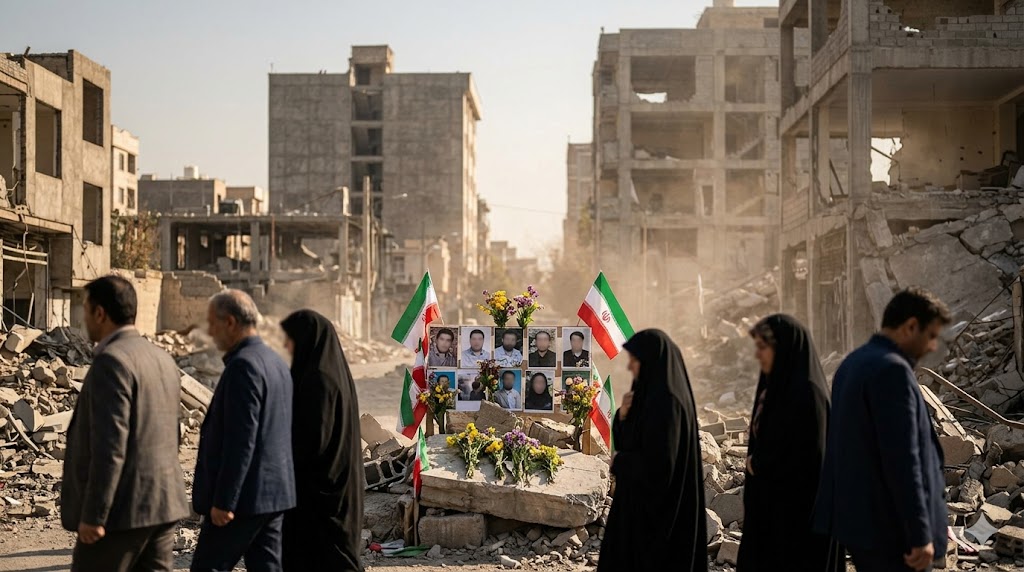
The Geopolitical Dimensions: emotional weight and human toll described in Tehran,.
Iran-Israel Fighting: Strikes on Tehran Continue
Compounding US-Iran tensions is the parallel Iran-Israel conflict. Even as US-Iran ceasefire talks unfolded, Israeli forces conducted strikes inside Iran, including on targets in Tehran. Reports confirm damage to civilian infrastructure, including one of Tehran’s few synagogues—an incident Israel later expressed regret over but did not halt broader operations. Israeli officials have signaled readiness to resume full-scale actions if Iran violates the fragile truce or advances its nuclear program.
Iran has retaliated with missile and drone strikes, though its arsenal has been significantly degraded. US intelligence assesses that Tehran retains thousands of ballistic missiles in hidden facilities, raising fears of renewed escalation. The human cost is mounting. Iranian state media and independent reports describe widespread destruction in Tehran and other cities, with civilian casualties and infrastructure ruin fueling public anger. Pro-regime gatherings in Tehran have featured photographs and memorials honoring those killed in the war—poignant reminders of families shattered by airstrikes and the emotional scars that will linger long after any diplomatic resolution.
The Nuclear Demand: “No Bombs, No Deal”
At every turn, Trump has reiterated the core US demand: Iran must not start—or restart—making nuclear bombs. The collapsed Islamabad talks centered on verifiable dismantlement of Iran’s nuclear program. Vance emphasized that Iran refused to provide the “affirmative commitment” Washington requires to prevent quick weaponization. The president has warned that without this, military options remain “locked and loaded,” with the capability to “finish up the little that is left of Iran.”
Previous rounds of US-Iran negotiations, including those in Oman and Rome, had explored frameworks for a new nuclear deal. Yet Iran’s rejection of long-term constraints has left the Iran nuclear deal latest efforts in tatters. Trump has accused Tehran of bad-faith delays, while Iranian officials blame US maximalism. The absence of a deal accelerates regional instability, with Israel maintaining pressure through continued strikes and the US enforcing its blockade.
Human and Emotional Dimensions Amid Geopolitical Chess
Beyond strategy lies the human toll. In Tehran, residents navigate rubble and power outages while mourning loved ones lost to weeks of bombardment. Photographs of destroyed homes, airports, and cultural sites circulate widely as symbols of resilience—and loss. Families gather at makeshift memorials, sharing stories of those killed in the war. These images humanize the abstract headlines of “US-Iran tensions” and “Iran Strait of Hormuz blockade,” reminding global audiences that geopolitical maneuvering carries profound personal costs.
Iranian society appears divided yet defiant. Pro-government rallies wave flags and chant support, yet ordinary citizens express skepticism about quick recovery. The emotional weight of war—amplified by unceasing Iran-Israel exchanges—adds urgency to diplomatic efforts, even as hardliners on both sides dig in.
Broader Geopolitical Scenario: Acceleration or Stalemate?
The failed Islamabad talks mark a critical juncture. Trump has stated the US will leave its “final offer” on the table while accelerating military and economic measures. Mine-clearing operations in the Iran Strait of Hormuz continue, US warships patrol nearby, and tariffs loom over potential arms suppliers. European powers, including France and Italy, have explored back-channel diplomacy on Hormuz security but have yet to broker breakthroughs.
Analysts warn that prolonged closure of the Iran Strait of Hormuz could trigger a global energy crisis. Oil prices have surged, and shipping firms are advised against paying Iranian tolls. Meanwhile, Iran’s nuclear program remains opaque, with the regime refusing the concessions demanded to prevent bomb-making. The interplay of US tariffs, naval blockade, and Israeli strikes creates a multi-front pressure campaign that could either force concessions or spiral into wider conflict.
Trump’s strategy appears designed to accelerate resolution on US terms: no nuclear weapons, open shipping lanes without tolls, and isolation of Iran’s military suppliers. Whether this approach yields a breakthrough or entrenches positions remains uncertain. For now, the Iran Strait of Hormuz stands as both literal and symbolic chokepoint in US-Iran relations.
Conclusion: Navigating an Uncertain Horizon
The current US-Iran geopolitical scenario is fluid and fraught. With talks collapsed, a naval blockade in place, 50% tariffs threatened, and Iran-Israel fighting ongoing, the path to de-escalation is narrow. Trump and JD Vance have drawn clear red lines on the Iran nuclear deal and the Iran Strait of Hormuz toll issue. Iran remains adamant, prioritizing sovereignty over its waterway and rejecting demands to abandon nuclear ambitions.
As US Navy destroyers enforce the blockade and global markets react, the human stories from Tehran—of loss, resilience, and remembrance—serve as a sobering backdrop. Photographs of war dead and damaged landmarks underscore what is truly at stake. Diplomatic windows may reopen, but only if both sides find common ground on nuclear restraint and safe, toll-free passage through the Iran Strait of Hormuz.
The coming days will test whether economic pressure, naval presence, and targeted strikes can accelerate a deal—or whether the current impasse hardens into prolonged confrontation. For the United States, Israel, Iran, and the world, the stakes in this Iran Strait of Hormuz crisis could not be higher. Stability in the Middle East—and global energy security—hang in the balance.
Frequently Asked Questions
What is the primary significance of US-Iran Hormuz Crisis: Trump Orders Naval Blockade?
A Flashpoint Ignites AgainThe geopolitical landscape between the United States and Iran has reached a dangerous new inflection point in April 2026. What began as a fragile two-week ceasefire following weeks of intense conflict has crumbled into open confrontation over the Iran Strait of Hormuz.
How does this development impact International Affairs?
President Donald Trump’s announcement of a full US Navy blockade—coupled with 50% tariffs on nations supplying weapons to Tehran—signals a hardline shift after marathon talks in Islamabad collapsed without agreement.At the heart of the impasse lies control of the Iran Strait of Hormuz, the narrow waterway through which one-fifth of global oil and gas flows. Iran’s insistence on imposing tolls for safe passage—reports cite fees as high as $1 per barrel in cryptocurrency or millions per vessel—has been dismissed by Washington as “world extortion.” Trump and Vice President JD Vance have made clear: if the toll issue cannot be managed on US terms, no ships will cross the Iran Strait of Hormuz under American watch.
What are the key future projections to monitor?
This latest escalation in US-Iran tensions echoes decades of mistrust but carries fresh urgency amid ongoing Iran-Israel fighting and Tehran’s unresolved nuclear ambitions.Background: From Ceasefire to CollapseThe current crisis traces back to early 2026, when US and Israeli strikes targeted Iranian military and nuclear infrastructure during what some have called the Twelve-Day War.