US-Iran Conflict 2026: Escalation, Stalemate, and the High Stakes of a Regional War That’s Reshaping the World
International Affairs • March 27, 2026 • Global Edition

In the spring of 2026, the US-Iran conflict has entered its fourth week as one of the most volatile chapters in Middle East geopolitics. What began as a coordinated US-Israeli surprise airstrike campaign on February 28—codenamed Operation Epic Fury—has rapidly evolved into a full-spectrum 'US-Israel-Iran conflict' with ripple effects across the Gulf, global energy markets, and diplomatic corridors from Washington to Tehran. Searches for terms like 'US Iran conflict news', 'Iran US conflict latest update', and 'US Iran conflict escalation 2026' dominate headlines and social feeds because this is no longer a distant proxy war. It is direct, costly, and dangerously open-ended. The conflict has already claimed thousands of lives, closed the Strait of Hormuz to much of the world’s oil traffic, and forced governments from the UAE to Israel to scramble for shelter under missile barrages. Yet amid the smoke and sirens, both sides are locked in a high-stakes game of nerves. Washington insists it is “very close” to its objectives; Tehran calls the American overtures “maximalist and unreasonable.” Neither appears ready to blink. This in-depth analysis examines the roots of the 'Iran war', why neither superpower nor regional power is backing down, what each side hopes to gain, and—most urgently—how ordinary citizens from Tehran to Dubai to New York are already paying the price.
The Spark That Ignited the 2026 Iran War: Long-Brewing Causes of the Israel-Iran Conflict
To understand why the 'US Israel Iran conflict' exploded in late February 2026, one must look beyond the immediate airstrikes. The deeper causes of the 'Israel Iran conflict' stretch back decades but reached a tipping point in the preceding years. Iran’s post-1979 revolutionary ideology framed Israel as an illegitimate “Zionist entity” and the United States as its enabler. In response, Tehran built the “Axis of Resistance”—a network of armed proxies including Hezbollah in Lebanon, Hamas in Gaza, the Houthis in Yemen, and various Shiite militias in Iraq and Syria. These groups gave Iran strategic depth without direct confrontation.
By early 2025, however, that network was fraying. Israel’s campaigns against Hamas and Hezbollah, combined with the fall of the Assad regime in Syria, left Iran’s forward defenses exposed. At the same time, Iran’s nuclear program—enriched uranium stockpiles nearing weapons-grade levels—triggered alarm bells in Jerusalem and Washington. Intelligence assessments suggested Tehran was months, not years, from a potential breakout. When indirect talks in Oman collapsed in January 2026, the window for diplomacy slammed shut.
The final trigger came on February 28. In a meticulously planned operation, the United States and Israel launched nearly 900 strikes in the first 12 hours, targeting nuclear sites, missile batteries, air defenses, naval bases, and senior leadership. Supreme Leader Ali Khamenei was among those killed, along with key IRGC commanders. Iran’s response was swift and asymmetric: hundreds of ballistic missiles and thousands of drones rained down on Israeli cities, US bases in the Gulf, and civilian infrastructure in the UAE, Kuwait, Bahrain, and Jordan. The "UAE Iran conflict”suddenly became personal as Dubai and Abu Dhabi absorbed the brunt of Iranian retaliation.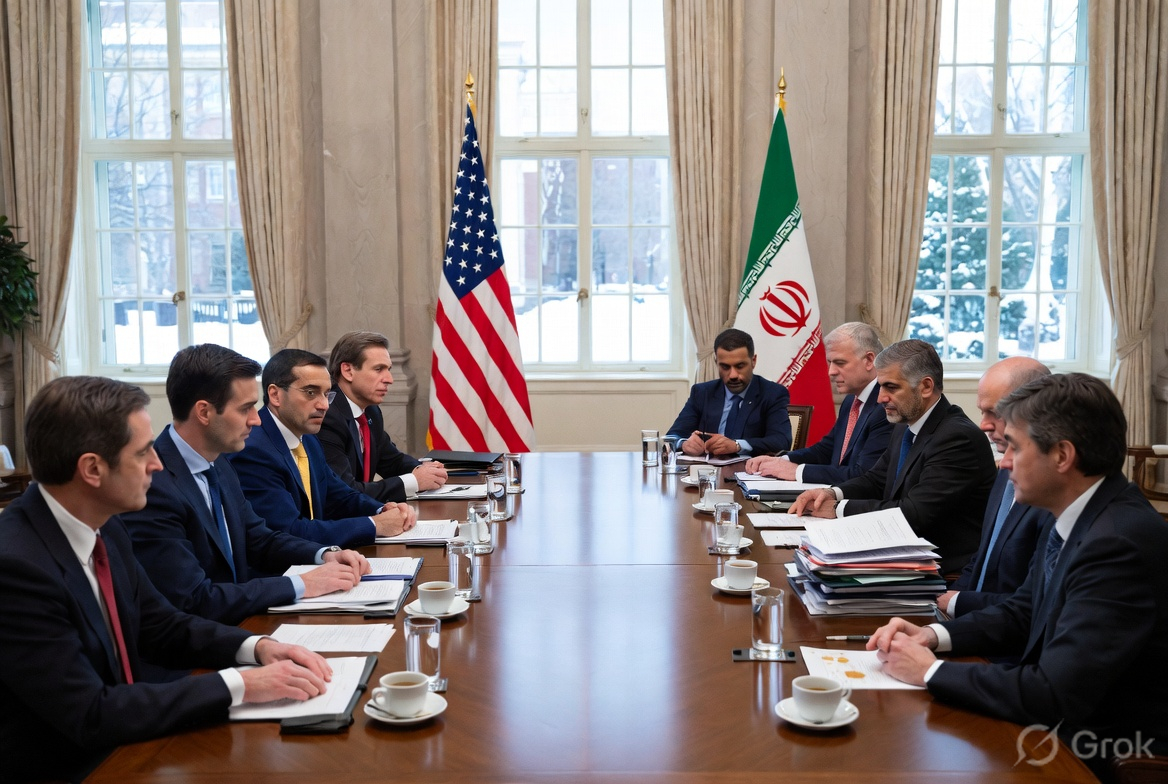
Diplomatic back-channel talks — Behind-the-scenes negotiations trying to find the “exit ramp” mentioned, exactly as the fragile regional order hangs in balance.
Day 27 and Counting: Current Military and Naval Realities of the Iran Conflict
As of March 27, 2026, the 'Iran US conflict latest update' paints a picture of sustained but asymmetric pressure. US Central Command reports over 10,000 targets struck inside Iran, with 92 percent of Iran’s large naval vessels destroyed and missile/drone launch rates slashed by more than 90 percent. Israeli strikes have continued, including reported elimination of senior IRGC naval commander Commodore Alireza Tangsiri. Iran’s conventional navy is effectively neutralized, turning the "Iran war naval conflict" into a story of coastal defense rather than blue-water projection.
Iran has not folded. It continues launching missile barrages at Israel and drone swarms at Gulf targets. The Strait of Hormuz—the chokepoint for roughly one-fifth of global oil—remains partially disrupted, with Iran selectively blocking adversary shipping while allowing limited passage for others. This maritime harassment has stranded an estimated 20,000 seafarers and sent oil prices spiking, with knock-on effects on liquefied petroleum gas (LPG) and LNG markets that millions rely on for cooking and heating.
Casualties exceed 2,000 across all sides, with significant civilian tolls. Iran has installed Mojtaba Khamenei as the new Supreme Leader, signaling regime continuity. Proxies remain active, raising fears of wider spillover into Lebanon or Iraq.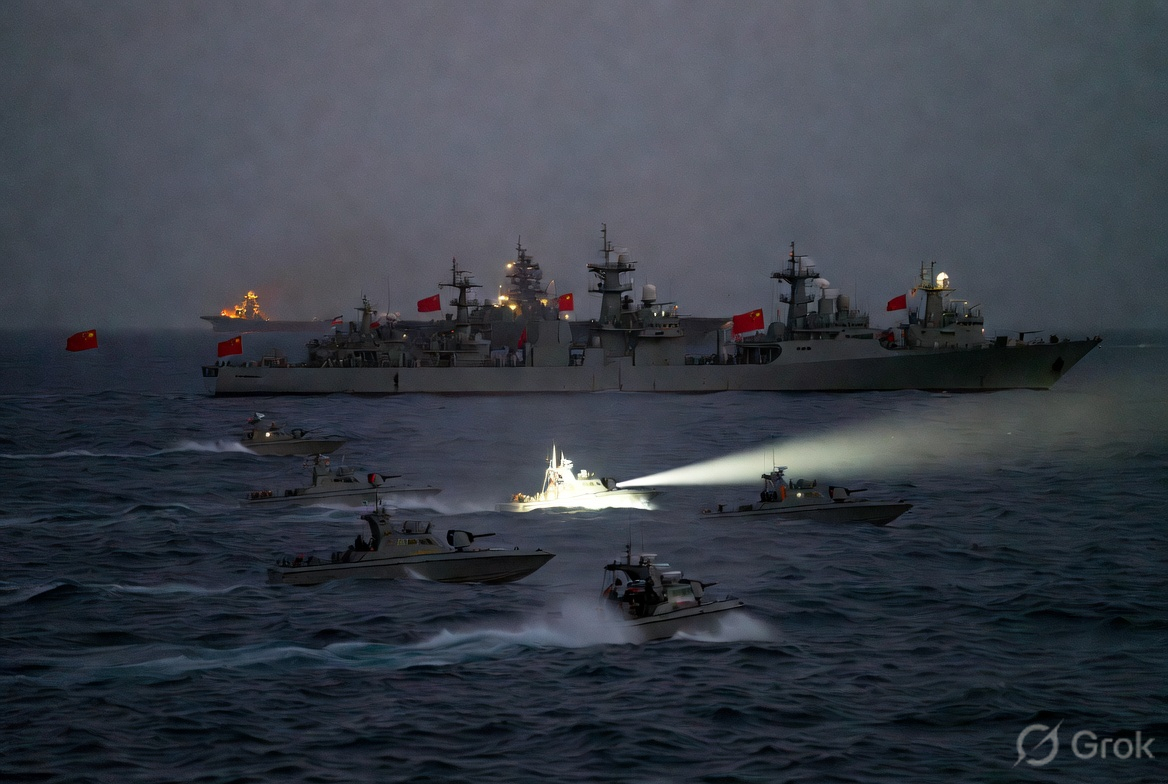 China monitoring the critical energy choke point, capturing the wider great-power rivalry and regional order fragility.
China monitoring the critical energy choke point, capturing the wider great-power rivalry and regional order fragility.Why the US Refuses to Back Down—and Why Iran Keeps Fighting
Two questions dominate every briefing room and think-tank seminar: Why won’t Washington walk away, and why does Tehran persist despite devastating losses?
For the 'United States' the calculus is rooted in long-term strategic imperatives. President Donald Trump has repeatedly framed the campaign as essential to “degrade Iran’s nuclear and missile programs,” eliminate the threat to Israel and Gulf allies, and prevent a nuclear-armed Iran from dominating the region. Having invested enormous political capital and military resources, a premature withdrawal would be seen as a humiliating climbdown—especially after the assassination of Khamenei and the destruction of so much Iranian hardware. Trump has delayed strikes on energy infrastructure for another 10 days, citing “productive conversations,” yet simultaneously warned of “unleashing hell” if Iran does not get “serious.” The message is clear: the US believes its military gains have shifted the balance of power decisively; backing down now would squander that advantage and embolden Tehran’s proxies for years to come.
Iran’s reasons for continuing the "Iran US conflict escalation" are more existential than tactical. The regime understands that total capitulation would signal weakness to its domestic population and regional partners. Tehran has rejected the US 15-point proposal as unrealistic, countering with its own five conditions: an immediate end to all attacks, reparations, and guarantees against future aggression. Iranian officials insist there are no direct talks—only indirect messages via Pakistan and others—and frame continued resistance as a matter of national honor and survival.
Crucially, Iran’s leadership knows it still possesses a nuclear card. While its overt program has been battered, the knowledge base, dispersed facilities, and enrichment expertise remain. This latent capability acts as both deterrent and bargaining chip. Tehran calculates that prolonged fighting raises the global cost—oil shocks, refugee flows, proxy flare-ups—until the international community pressures Washington to compromise. In short, Iran is playing for time, betting that pain inflicted on the world will eventually outweigh pain absorbed at home.
What Each Side Stands to Gain: Benefits and Hidden Calculus
From Washington’s perspective, the "US Iran conflict" offers several potential upsides. A weakened Iran reduces the immediate nuclear threat to Israel and the Gulf, potentially allowing normalization deals to advance. Degrading the IRGC navy and missile arsenal diminishes Iran’s ability to disrupt global shipping or threaten US bases. Long-term, a humbled Tehran could open the door to a new nuclear framework more favorable to the West than the collapsed JCPOA. Trump has hinted that success here would strengthen America’s hand in broader great-power competition with China and Russia.
For Iran, the benefits are subtler but no less real. Continued resistance burnishes the regime’s revolutionary credentials at home, rallying hardliners and buying time for domestic consolidation under the new Supreme Leader. It also keeps the Axis of Resistance relevant; Hezbollah and the Houthis remain active, forcing Israel and the US to divide their attention. Economically, the disruption of the Strait of Hormuz has already driven up global energy prices—ironically giving Iran leverage even as its own oil exports suffer. Diplomatically, prolonged conflict positions Tehran as the aggrieved party in the eyes of the Global South, potentially eroding US soft power. Iran is not seeking outright victory; it is seeking a negotiated off-ramp on terms that preserve regime survival and nuclear ambiguity.
Global Impact: From Oil Shocks to Everyday Hardships
The 'geopolitics Iran conflict update' is not confined to the Middle East. Energy markets have reacted sharply. With the Strait of Hormuz partially closed, oil prices have climbed, and LPG gas supplies—critical for households across Asia and Africa—face shortages and price spikes. Families in India, Pakistan, and parts of Europe are already feeling the pinch at the pump and in the kitchen. Airlines have rerouted or canceled flights; shipping companies face higher insurance and longer routes around the Cape of Good Hope.
Ordinary citizens are bearing the human cost too. In Iran, power outages, displacement, and mourning have become daily realities. In the UAE, residents of Dubai and Abu Dhabi have endured air-raid sirens and school closures. Israeli cities report injuries from missile strikes. Across the Gulf, expatriate workers and tourists find themselves caught in a conflict they never chose. Globally, the risk of radiological accidents near damaged nuclear sites has prompted IAEA warnings, while diplomatic missions in the region have drawn down staff amid credible threats from Iranian proxies. The 'Iran conflict diplomatic missions risk' has rarely been higher since the post-9/11 era. 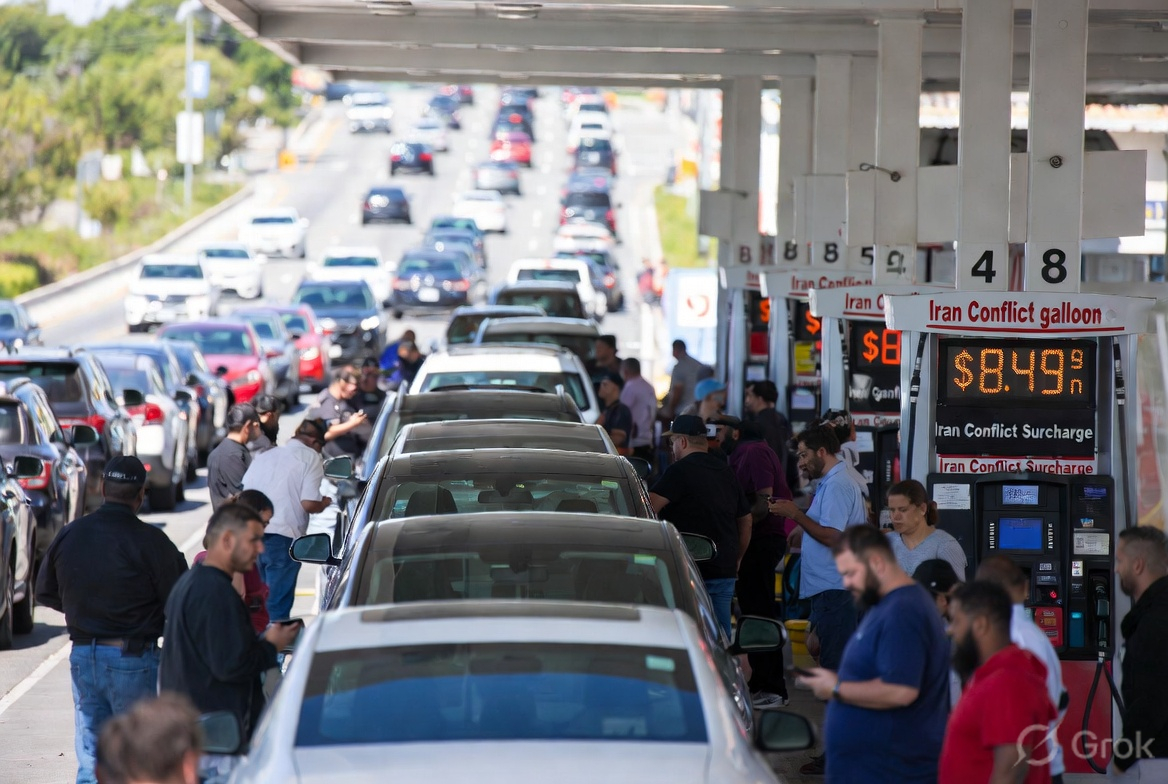 Economic crisis at the pump — The human and household cost of energy geopolitics playing out in real time, exactly as the world “pays the price at the gas station and supermarket.”
Economic crisis at the pump — The human and household cost of energy geopolitics playing out in real time, exactly as the world “pays the price at the gas station and supermarket.”Diplomatic Off-Ramps and the Narrow Path Forward
Despite the rhetoric, back channels remain active. Egypt and Pakistan are mediating; Trump claims indirect talks are advancing. Yet hardened positions—US demands for nuclear dismantlement and missile limits versus Iranian insistence on sovereignty and reparations—make compromise elusive. Analysts warn that the longer the war drags on, the narrower the options become. Air power alone cannot achieve regime change or total denuclearization; ground intervention carries enormous risks. Iran’s asymmetric tools—drones, proxies, maritime disruption—continue to raise the global price tag.